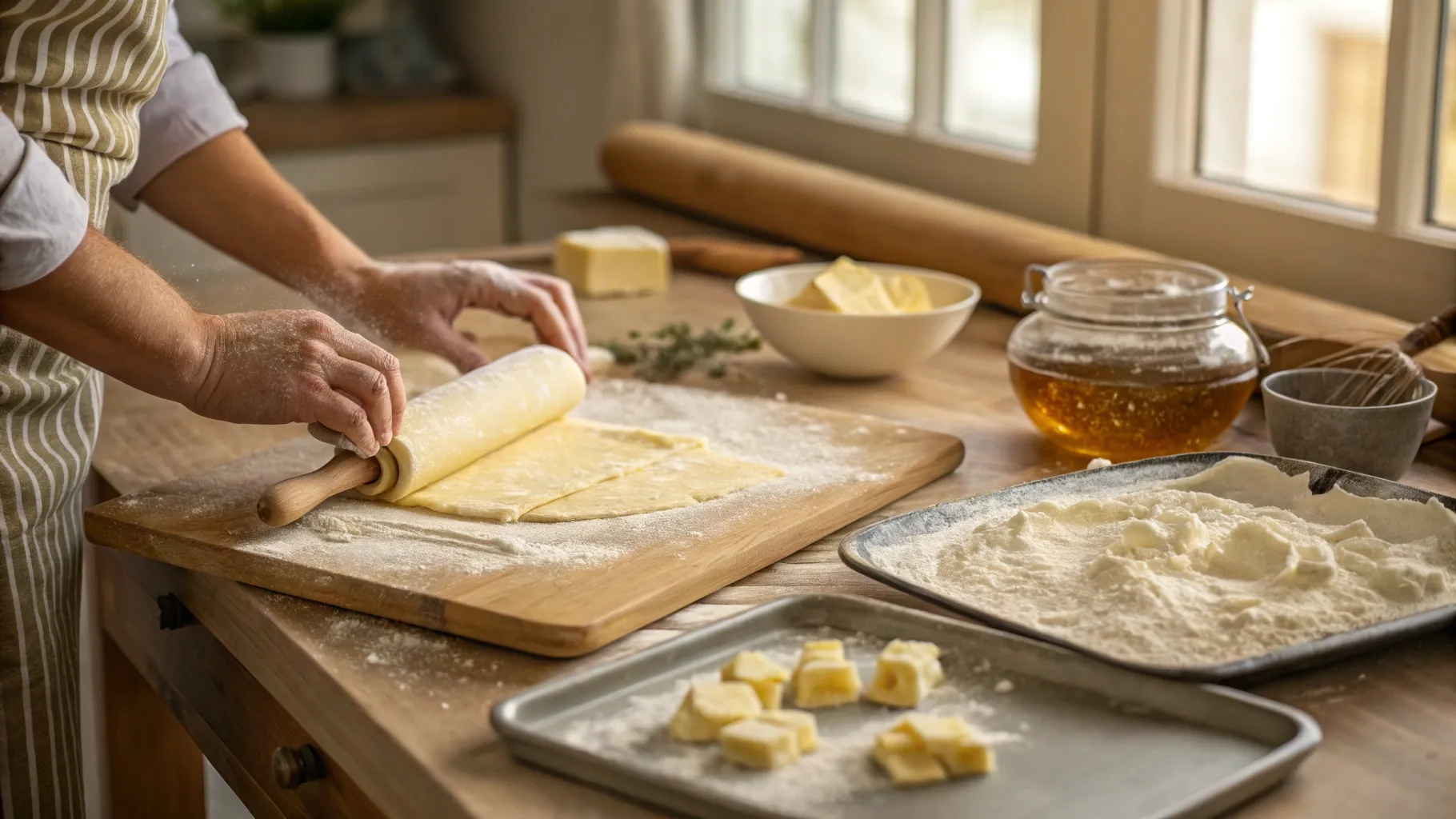
Preppy Kitchen’s John Cannell walks through a shockingly simple way to make flaky, sky-high puff pastry at home—an approachable, buttery dough that outshines store-bought sheets. This post adapts his method into an easy-to-follow guide so home bakers can create show-stopping tarts, turnovers, and danishes. If you’re into cooking, recipes, bon apetit then this is the perfect place to start.
Why make puff pastry at home?
Frozen puff pastry from the store is convenient, but making it at home rewards you with better flavor, crisper layers, and total control of ingredients. John highlights that this recipe is a "rough puff"—not a fully laminated dough—meaning fewer rolling-and-folding cycles but still impressive lift and flakiness. It’s ideal for sweet and savory applications and surprisingly forgiving for busy home cooks.
Key takeaways
- Use frozen, rock-hard butter (European-style if possible) for best results.
- This is a rough puff pastry — fewer folds, great texture.
- Chill the dough between steps: rest times are essential for rise and flakiness.
- Flexible: roll to 1/8" for tarts, bake at 375–400°F depending on the recipe.
- Perfect for quick tarts, turnovers, danishes, and savory galettes—cooking, recipes, bon apetit.
Ingredients (simple and precise)
- 2 cups all-purpose flour (about 240 g)
- 1 tablespoon granulated sugar
- 1/2 teaspoon salt
- 1 cup unsalted butter (2 sticks), frozen and rock hard — European-style recommended
- 6 tablespoons cold water, plus more as needed
Step-by-step: make the dough
1. Prep the dry mix
Whisk together the flour, sugar, and salt in a large bowl. This is your basic framework—simple and straightforward. Keep the bowl nearby so you can work quickly once the butter comes out of the freezer.
2. Grate the frozen butter into the flour
Using a box grater, grate the rock-hard butter directly into the flour and toss as you go. John stresses tossing the butter with the flour so you don’t end up with clumps. This method is the same trick he uses for pie dough: frozen butter grated into flour preserves small, solid pieces of fat that create flaky layers in the oven.
3. Add just enough cold water
Drizzle in 6 tablespoons of cold water while mixing. The goal is a shaggy, clumpable dough—not a sticky mess. Squeeze a handful: if it holds together, you’re done. Add extra water a tablespoon at a time only if needed. Keep the dough cold and avoid overworking to keep the butter intact.
4. Shape and chill
Turn the shaggy dough onto a lightly floured surface, press it together, and form into a compact square roughly 1" thick (about 2–2.5 cm). Wrap tightly in plastic and chill for at least 1 hour so the butter firms back up and the gluten relaxes.
Build layers: rolling and folding
After the initial chill, roll the dough into a 1/2" rectangle and perform four "roll-and-fold" cycles. Each cycle is: roll to about 1/2", fold into thirds (like a letter), rotate 90°, and repeat. John counts the cycles aloud—this method multiplies layers without the complexity of traditional lamination.
After the fourth cycle, fold into thirds one last time, wrap, and chill again for at least two hours (or up to two days). The dough can also be frozen for up to two months—thaw before using.
Helpful tip
If the dough seems springy while rolling, that’s the gluten activating. Chill longer to let it relax; it will be easier to work with and will puff better in the oven.
How to use and bake your puff pastry
Roll out to about 1/8" thickness for most recipes—using a bumper-equipped rolling pin can help ensure uniform thinness. Temperatures depend on the final pastry: bake plain puff at around 400°F for a crisp lift; danishes often do better at 375°F. Always brush exposed dough with egg wash for gloss and golden color.
- Quick tart: score a border, fill with caramelized onions and cheese, bake until puffed and golden.
- Turnovers: cut, fill with fruit and cream cheese, fold, seal with egg wash.
- Danish: fold edges over sweet cream cheese filling, top with jam or icing.
Troubleshooting & best practices
- If butter softens at any point, chill the dough or the bowl—cold butter is essential.
- Too much water makes the dough gummy; add water sparingly.
- Keep tossing the grated butter into the flour to avoid clumps and uneven pockets.
- Use European-style butter for a richer flavor and better color when possible.
Final thoughts
Homemade rough puff pastry is a low-fuss way to achieve delicate, crispy layers that beat store-bought dough in flavor and texture. With a few minutes of hands-on work, strategic chilling, and four simple folds, home bakers can unlock a world of tarts, turnovers, and danishes. It’s approachable, rewarding, and—most importantly—delicious. Try it this weekend and enjoy the results: cooking, recipes, bon apetit.
Homemade Puff Pastry Recipe — cooking, recipes, bon apetit. There are any Homemade Puff Pastry Recipe — cooking, recipes, bon apetit in here.

