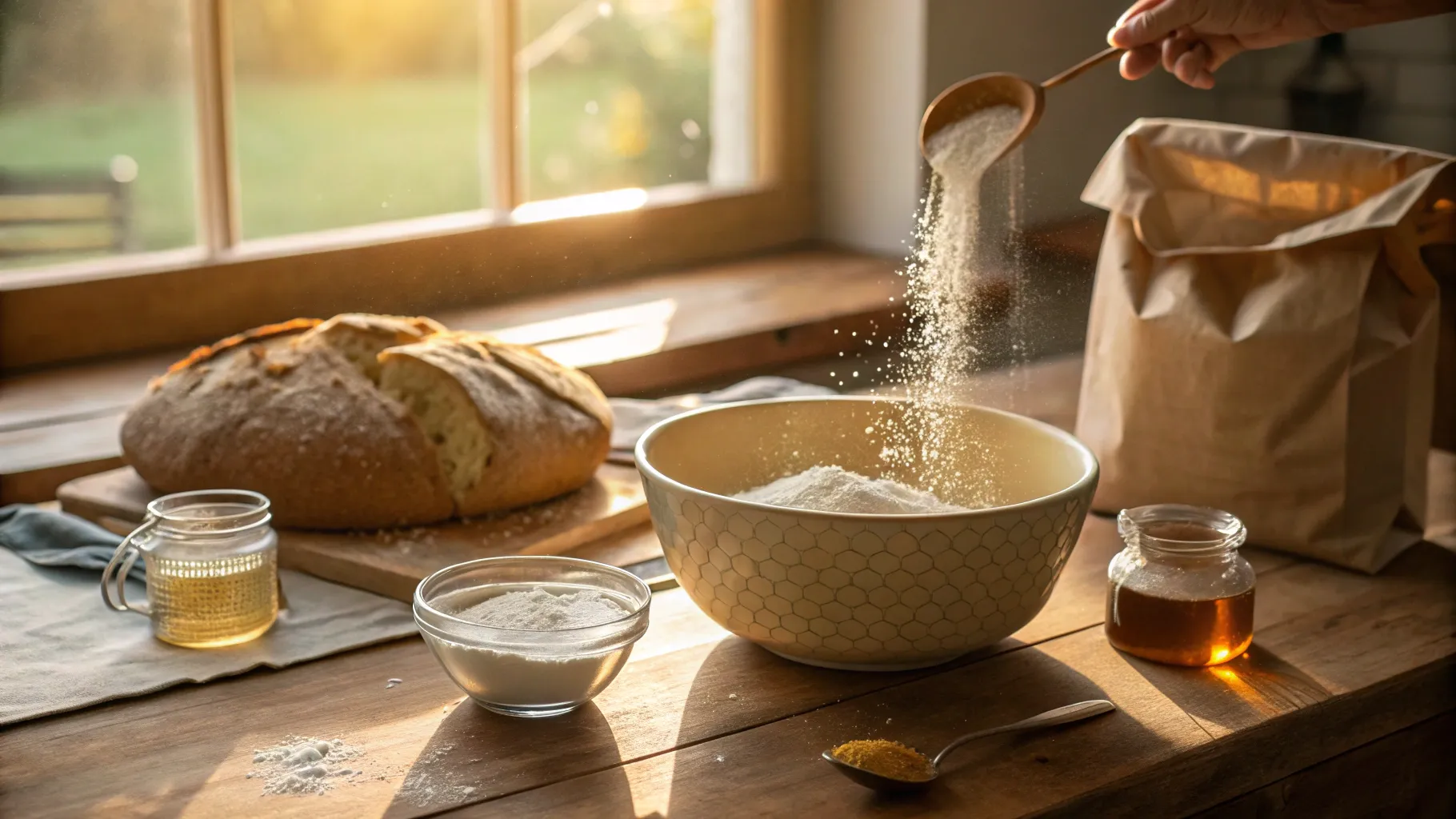
Jamie Oliver shows a joyful, no-fuss approach to homemade bread that’s perfect for anyone wanting to reconnect with simple cooking, easy recipes. This classic, humble loaf relies on strong flour, water and dried yeast — and it’s a brilliant starting point for bakers of all ages. The method is forgiving, therapeutic and endlessly adaptable.
What you’ll need
- 650 ml tepid (warm-ish) water
- 1 sachet dried yeast
- 1 kg strong (bread) flour, plus extra for dusting
- A pinch of salt
- Optional: a pinch of sugar or a drizzle of honey to wake the yeast
Why this simple recipe works
This is a classic, reliable dough. The yeast feeds on the starches in the flour, producing carbon dioxide that forms the lovely little bubbles that make the loaf spongy and light. It’s forgiving, so you can relax and enjoy the process — perfect for families and beginners alike.
"Now those bubbles are carbon dioxide... And that carbon dioxide will become the little bubbles in your spongy bread."
Step-by-step: make and knead the dough
- Pour 650 ml tepid water into a large bowl and sprinkle in one sachet of dried yeast. Mix with a fork. If using, add a pinch of sugar or honey to help wake the yeast.
- Leave a couple of minutes for bubbles to form — this is yeast waking up.
- Add most of the 1 kg strong flour, reserving a little. Mix with a fork until it starts to come together, then add a pinch of salt.
- Switch to your hands when the dough becomes too sticky for the fork. Dust hands with flour as needed and knead until elastic — stretch, fold, push and turn the dough. There’s no single “right” way; keep it moving until it feels springy.
- Shape the dough into a ball, dust with a little flour, cover with a damp cloth and leave to prove in a warm, draft-free spot for about 1–1½ hours or until doubled in size.
Shaping, flavouring and the twister
Once the dough has doubled, knock it back (a quick punch does the trick) and divide the kilo into two. One half becomes a rustic loaf — shape into a slipper or round, let it prove again for 30–60 minutes and flour the top for that rustic split.
The other half becomes a twister bread: roll it out to the size of a tea towel, spread your chosen flavour (pesto, jam, chocolate, or savory fillings), scatter cheese or olives, fold and roll. Quarter the roll, arrange in a tin or pan and let it prove until doubled.
Bake
- Preheat the oven to 180°C (350°F).
- Bake both loaves for about 35 minutes until golden and cooked through.
Expert tips and variations
- Flavour swaps: Go sweet or savory — jam, honey & raisins, chocolate & banana, or ham, cheese and tomatoes.
- Textural cues: The dough should feel elastic and springy; if it’s sticky, dust with flour — if too dry, add a teaspoon of water at a time.
- Proof times: Keep proving in a warm draft-free place. The dough is ready when it’s roughly doubled and springs back slowly when poked.
- Make flatbreads: If you don’t have yeast, roll and cook flatbreads on a hot pan — simple and tasty.
Storage, uses and serving ideas
Fresh bread keeps a day at room temperature in a cloth bag; toast or turn stale slices into croutons, breadcrumbs or panzanella. The twister loaf is brilliant for sharing — pull-apart layers make it fun and perfect for picnics or family meals.
Final thoughts
Jamie’s approach celebrates the joy of hands-on baking and proves that humble ingredients can produce fantastic results. Give this recipe a go — it’s a lovely entry into the world of cooking, easy recipes, and the flavours you can create from simple pantry staples.
How To Make Bread At Home | Jamie Oliver — cooking, easy recipes. There are any How To Make Bread At Home | Jamie Oliver — cooking, easy recipes in here.

