America’s Test Kitchen presents a joyful, failproof approach to smoked prime rib that proves smoking can elevate a classic roast. In this guide, Morgan’s step-by-step method is explained and expanded so home cooks can replicate the same rosy, juicy results—complete with a bright horseradish sauce. This post blends clear technique with practical tips for anyone looking to level up their cooking, recipes, bon apetit game.
Key takeaways
- Start with a first-cut bone-in standing rib roast for the best texture and flavor.
- Dry-salt the roast uncovered to mimic dry aging and improve seasoning penetration.
- Use a charcoal "snake" and a few hickory wood chunks for a gentle, nuanced smoke.
- Cook to an internal temperature of 115°F, then rest 45 minutes for perfect carryover to around 125°F.
- A bright horseradish sauce makes a perfect companion—make ahead to save time.
Why smoke prime rib?
Smoked prime rib keeps the classic beefy flavor front and center while adding a subtle, savory note of smoke. Instead of masking the meat with heavy wood flavor, this method aims for a gentle kiss of smoke that amplifies the roast’s natural richness. The result is a roast with steak-quality slices from the eye and brisket-like texture near the outer muscles—essentially two delicious experiences in one cut.
Ingredients and simple horseradish sauce
Morgan keeps the roast seasoning simple—kosher salt and black pepper—so the beef shines. The complimentary horseradish sauce brightens every bite and is quick to prepare.
For the roast
- 6 lb bone-in standing rib roast (first-cut)
- 2 tablespoons kosher salt
- 1 tablespoon freshly ground black pepper
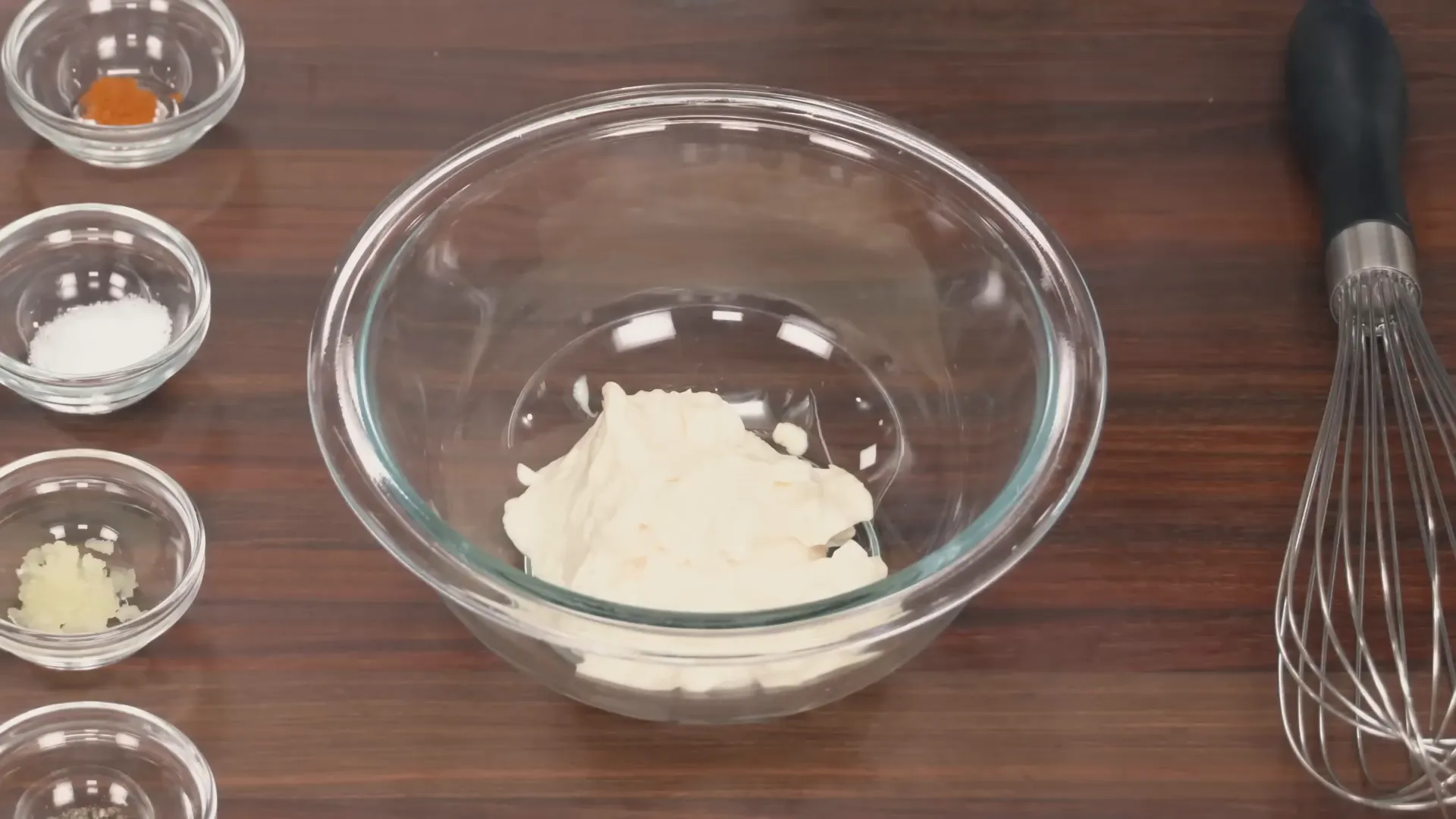
Bright horseradish sauce
- 1/2 cup mayonnaise
- 1/3 cup prepared horseradish (adjust for heat)
- 2 tablespoons lemon juice
- 1 teaspoon Worcestershire sauce
- 1 clove garlic, minced
- 3/4 teaspoon kosher salt (or 3/8 teaspoon table salt)
- Pinch of cayenne
Whisk all sauce ingredients together, chill at least 30 minutes (or up to 2 days). This bright, tangy sauce offers nasal-clearing heat and a creamy counterpoint to the rich beef.
Prep the roast: crosshatch and dry-salt
Trim is minimal—leave the quarter-inch fat cap intact. Morgan cross-hatches the fat in a one-inch pattern going only through fat, not into meat. That increases surface area for seasoning and helps the fat render evenly on the grill.
- Make shallow diagonal cuts across the fat cap in a one-inch grid.
- Rub 2 tablespoons kosher salt and 1 tablespoon pepper into the crosshatches, working some seasoning under the fat where possible.
- Refrigerate uncovered for at least 24 hours and up to 4 days—this mimics a gentle dry-age and concentrates flavor.
Grill setup: charcoal snake, wood chunks, and a water pan
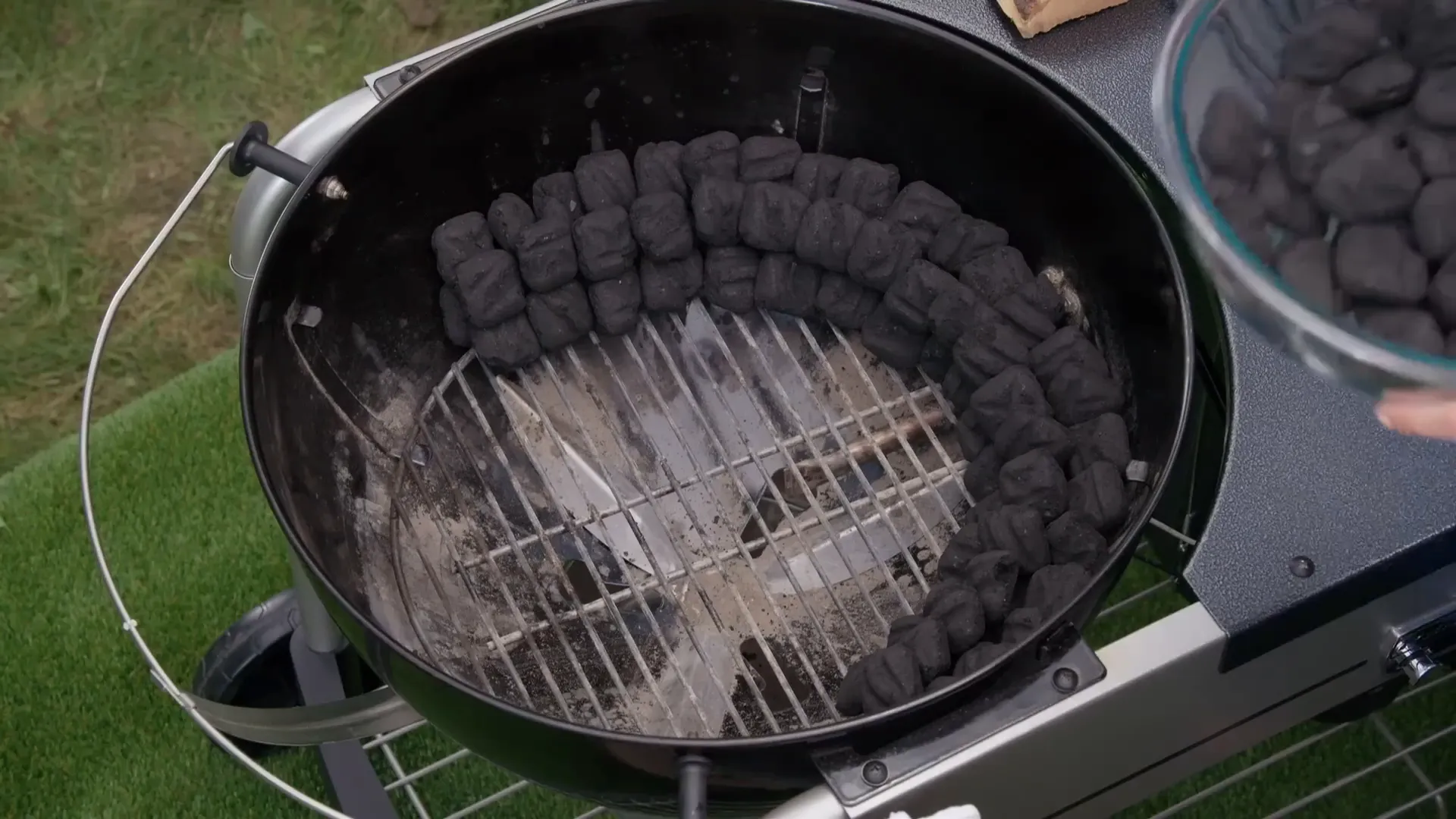
This method uses a classic charcoal "snake" for a steady, hours-long burn without constant tending. The goal is stable low-and-slow heat with small bursts of wood smoke.
Steps to set the grill
- Open all vents for airflow.
- Arrange 40 briquettes in a C shape around the edge of the grill and add another 40 on top (80 total).
- Place three hickory wood chunks spaced two inches from each end and one in center—enough for subtle smoke, not overpowering flavor.
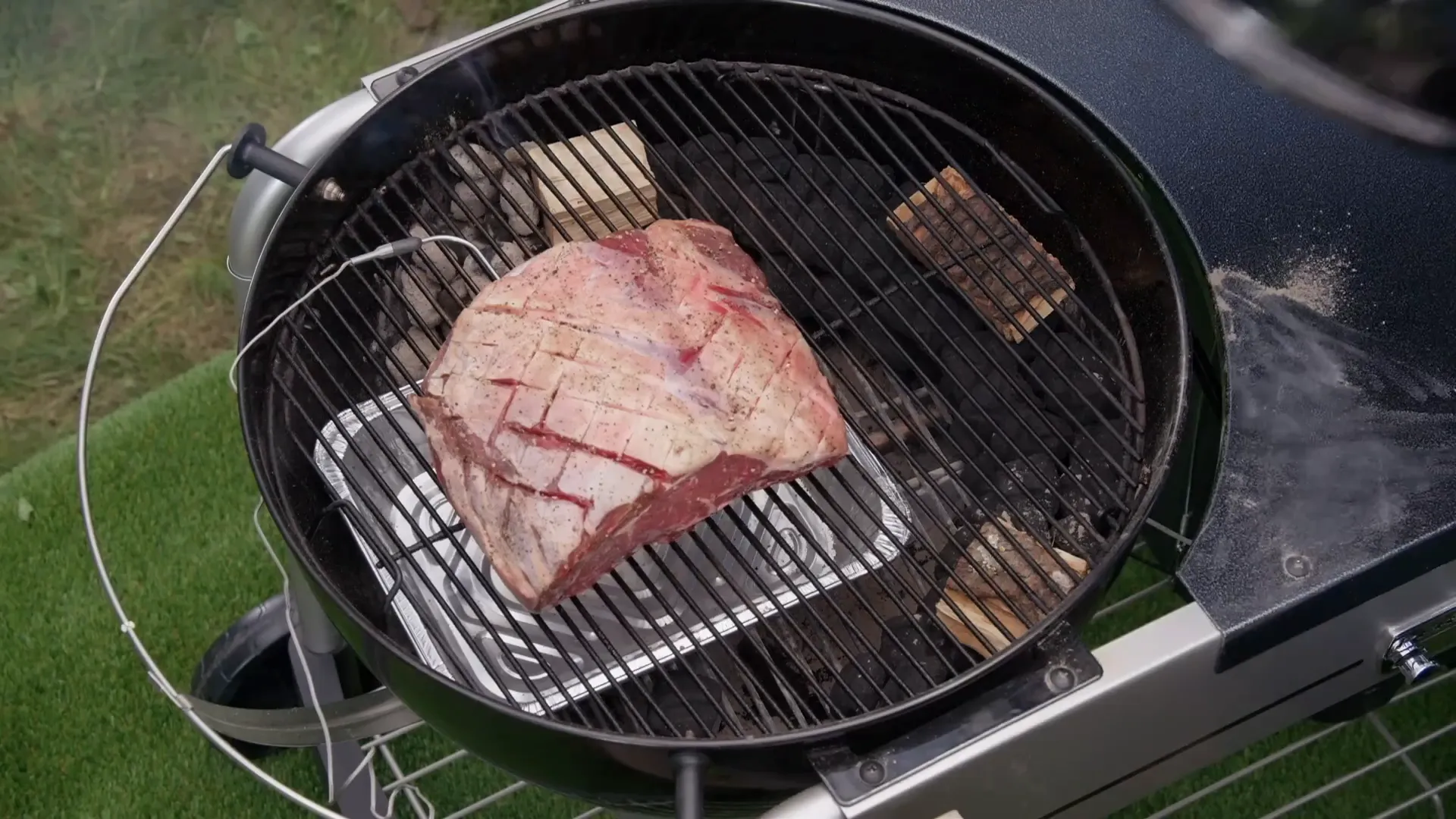
- Set a 13x9 disposable pan with 6 cups of water in the grill to help regulate temperature and add humidity.
- Light a small group of coals (about 10) at one end to start the snake; they’ll ignite the chain like a domino.
- Clean and oil grates before placing the roast.
- Insert a reliable probe thermometer into the center of the roast; position the bones facing the arch of the snake to act as a heat buffer.
A probe thermometer is one of the most useful investments for this recipe; it ensures consistent results every time.
Cooking timeline and temperature targets
Patience pays off. Morgan targets an internal temperature of 115°F before removing the roast from the grill. Expect about 2.5–3.25 hours, depending on grill conditions and roast size.
- Cook until probe reads 115°F.
- Remove roast and tent loosely with foil.
- Rest 45 minutes—carryover will bring the roast to around 125°F, ideal for a rosy, medium-rare center.
The charcoal snake often isn’t fully spent when the roast comes off the grill—that’s fine. A few unused coals are preferable to risking an early burnout mid-cook.
Carving and serving tips
After a 45-minute rest, carving becomes easy and attractive by using the bones as a guide. Morgan props the roast so the bones are visible, rests the knife against them, and uses long, smooth strokes to slice.
- Cut 3/4-inch slices for an elegant serving; reserve end pieces for guests who prefer more well-done portions.
- Serve with the chilled horseradish sauce on the side so each diner can add brightness and heat to taste.
- Look for a slight smoke ring around the edge and an eye of perfect medium-rare in the center—this is the signature of a successful smoked prime rib.
"It's just kissed with smoke." — Morgan
That delicate smoke note complements but never overwhelms the beefy, buttery richness of the prime rib. The charred exterior adds a pleasant textural contrast while the interior stays juicy thanks to the low-and-slow cook and the water pan’s humidity.
Pro tips and troubleshooting
- If the grill temperature drifts, adjust vents slightly—more air increases heat, less air dials it down.
- Want stronger smoke? Add a few more wood chunks, but remember: this cut benefits from subtlety.
- No probe thermometer? Use one, anyway—this roast is expensive and worth the small investment for dependable results.
- Make the horseradish sauce a day ahead to save time and let flavors meld.
Final thoughts
Smoking a prime rib the way Morgan demonstrates yields a centerpiece that’s both familiar and new: classic prime rib richness with a whisper of smoke and a bright horseradish kick. This approachable technique—crosshatch the fat, dry-salt, set a charcoal snake, cook to 115°F, and rest—lets home cooks produce restaurant-caliber results that delight guests and celebrate the joy of cooking, recipes, bon apetit.
This article was created from the video Does Prime Rib Taste Better Smoked? | Cook's Country | America's Test Kitchen with the help of AI.
Does Prime Rib Taste Better Smoked? | America's Test Kitchen — cooking, recipes, bon apetit. There are any Does Prime Rib Taste Better Smoked? | America's Test Kitchen — cooking, recipes, bon apetit in here.

