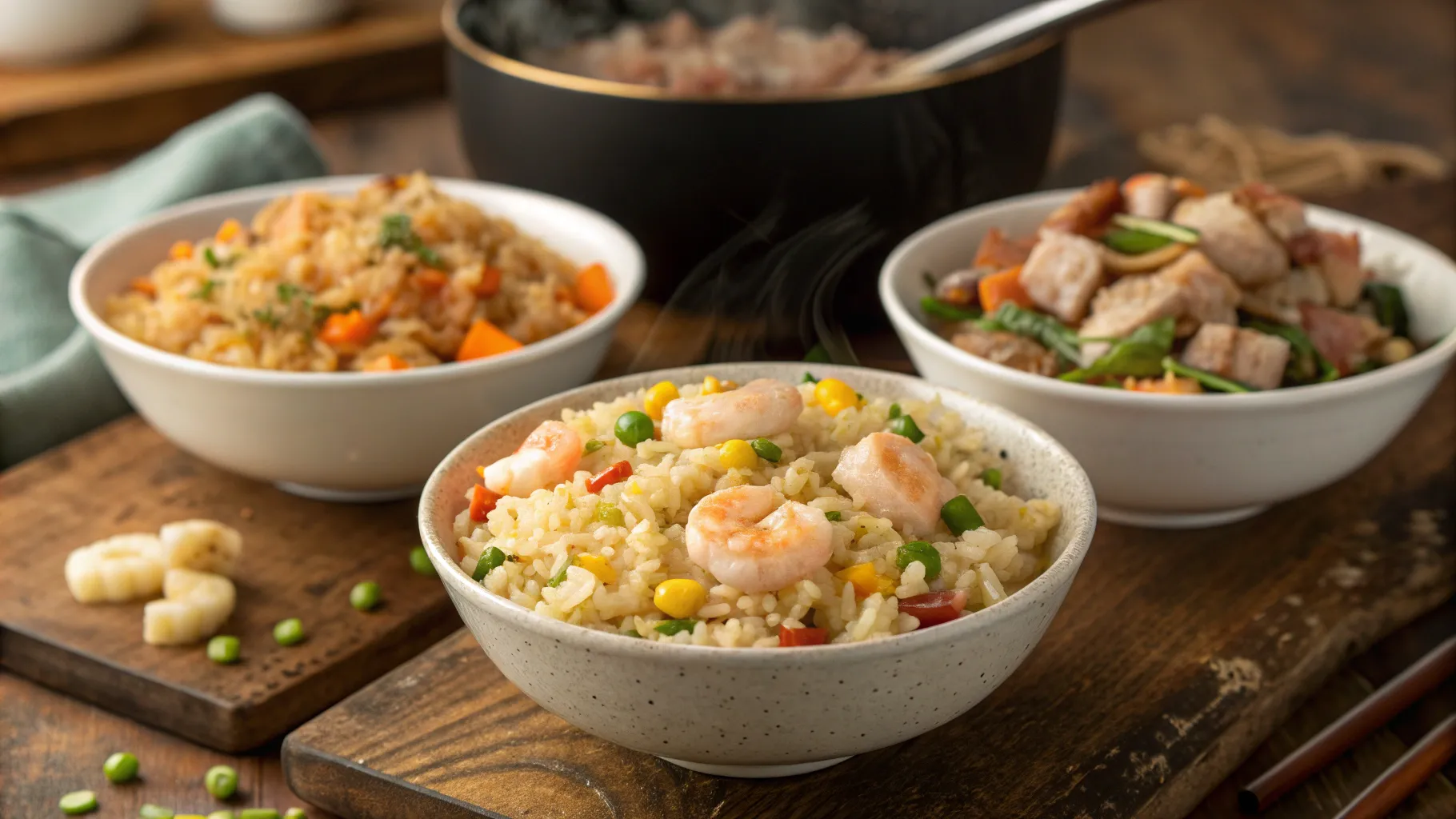
America's Test Kitchen and chef Lan Lam share a cheerful, practical guide to fried rice that every home cook can follow. This piece condenses Lan’s clear formula—stale rice, uniformly sized mix-ins, and a hot pan—into an easy-to-follow recipe and technique breakdown so readers can bring the same reliable results to their own kitchen. cooking, recipes, bon apetit appears throughout as a reminder that technique makes all the difference.
Key takeaways
- Use stale or cooled rice to keep grains separate.
- Cut mix-ins uniformly so every bite is balanced.
- Cook ingredients in order: fully cooked first, delicate items later.
- Finish with an oil-based flavor and season generously with salt.
Why stale rice matters
Lan explains that the single most important ingredient trick is stale rice—rice that’s been cooled so the starches recrystallize (retrogradation). That firm, drier grain separates easily in the pan and won’t glue together. The fridge speeds this process: rice stales much faster chilled than at room temperature.
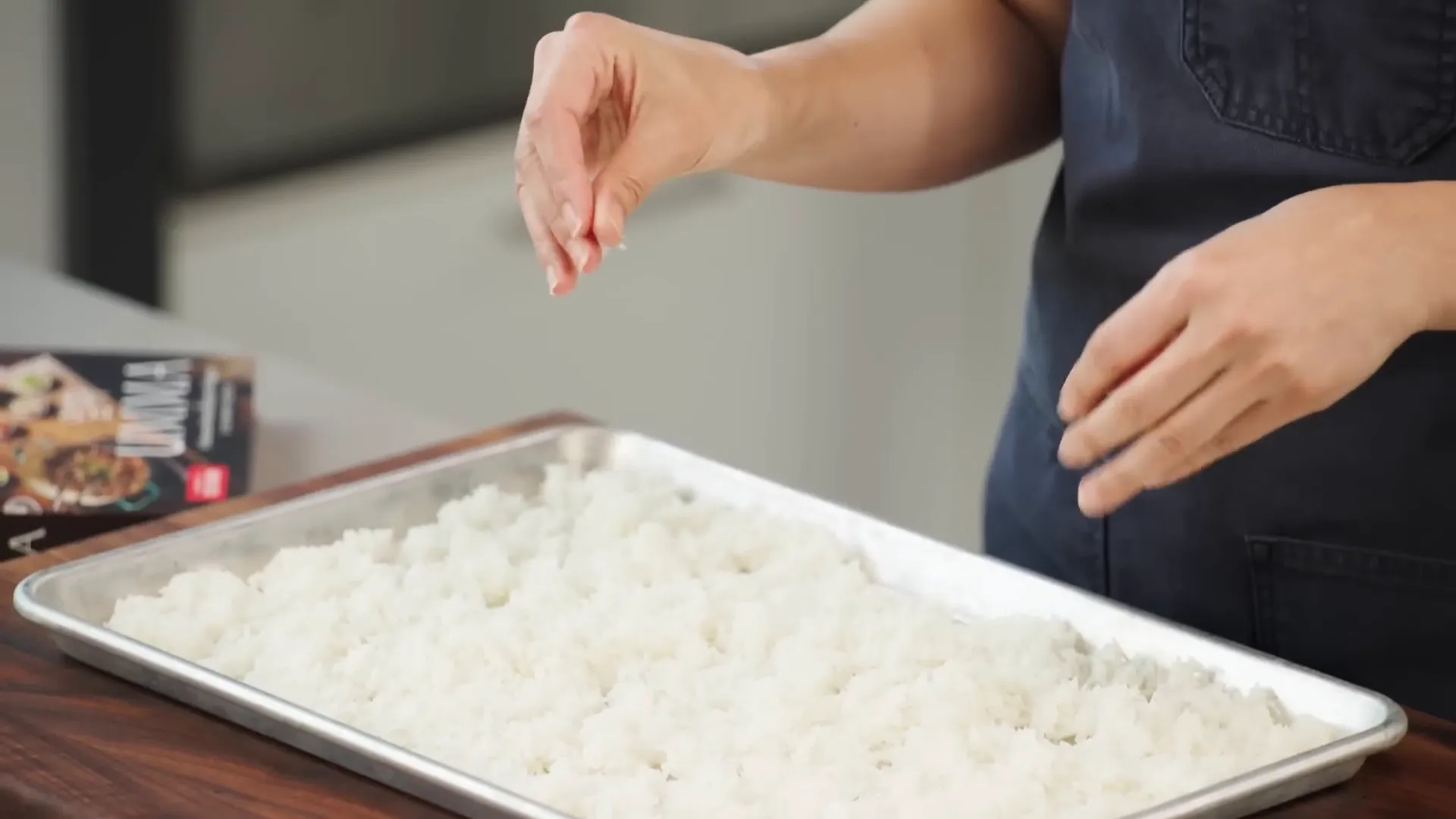
If starting from fresh rice, spread it on a rimmed sheet to cool and pop it in the fridge for about 30 minutes, or gently fluff into a container and chill. Brown rice is also an option—its intact bran layer reduces stickiness, so staling is less critical.
The mix-ins and prep
Lan’s simple, classic mix-ins: scrambled eggs plus any proteins and vegetables on hand. In his example he uses ham, eggs, peas, carrots, and scallions. Two simple rules:
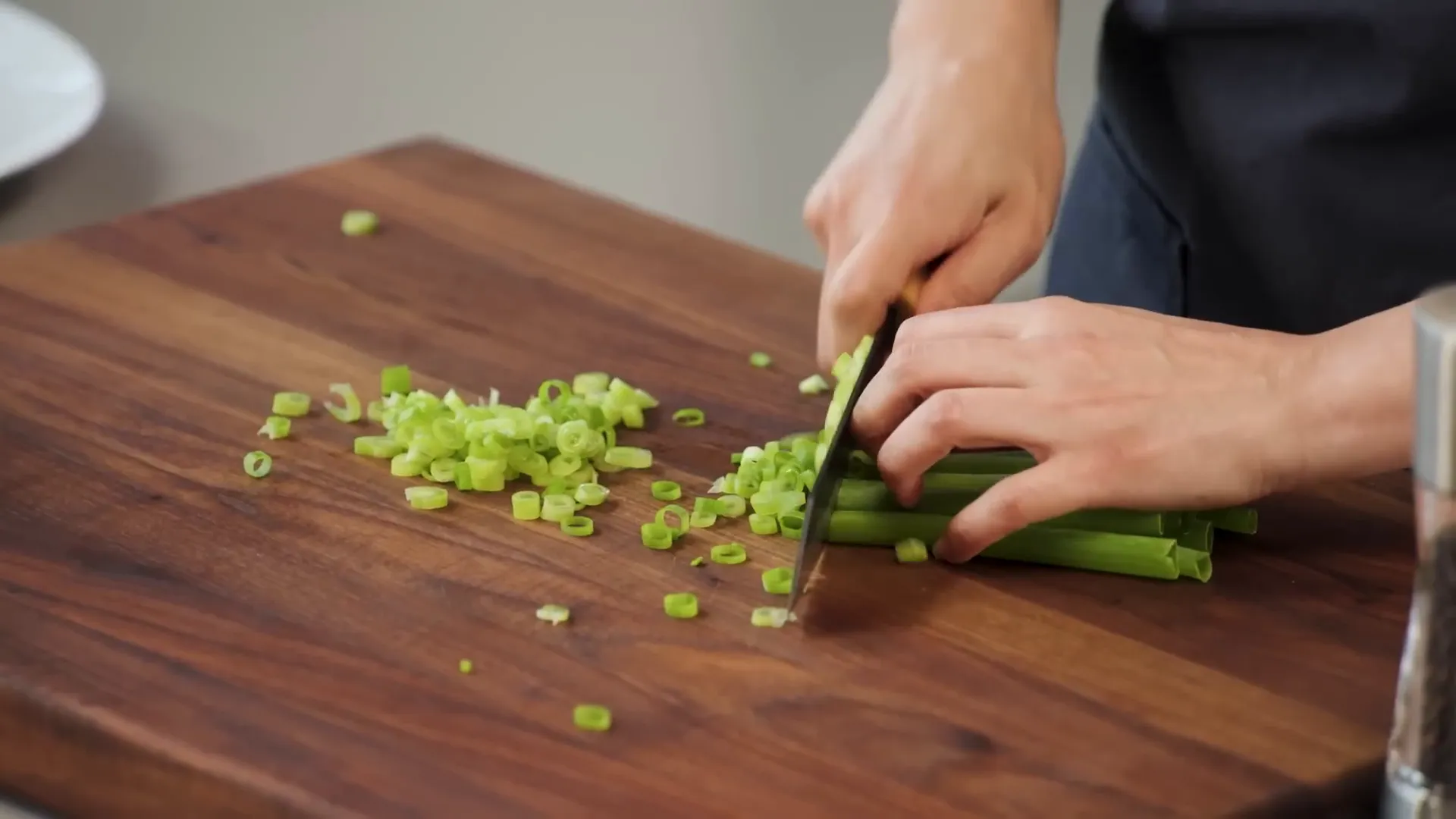
- Dice everything uniformly (about 1/4–1/2 inch) so pieces cook evenly and appear in every bite.
- Separate scallion whites and greens—the whites go in early to flavor the oil; the greens finish the dish.
Beat eggs ahead of time with a pinch of salt—salting early slightly denatures the proteins, giving softer, more cohesive cooked egg pieces. Lay out a “landing zone” plate to hold each component as it finishes; this keeps the wok organized and makes seasoning easier.
Order of operations: step-by-step
- Preheat a carbon-steel wok until wisps of smoke appear.
- Cook the eggs quickly first in a bit of oil; barely color them. Remove to the landing plate.
- Cook dense vegetables (carrots, mushrooms, etc.) in a teaspoon of oil until tender; salt lightly and remove.
- Quickly heat cooked proteins (ham, roast chicken, Chinese sausage) just to warm; remove.
- Lower heat slightly. Add more oil, then scallion whites to infuse the oil—aim for translucence, not browning.
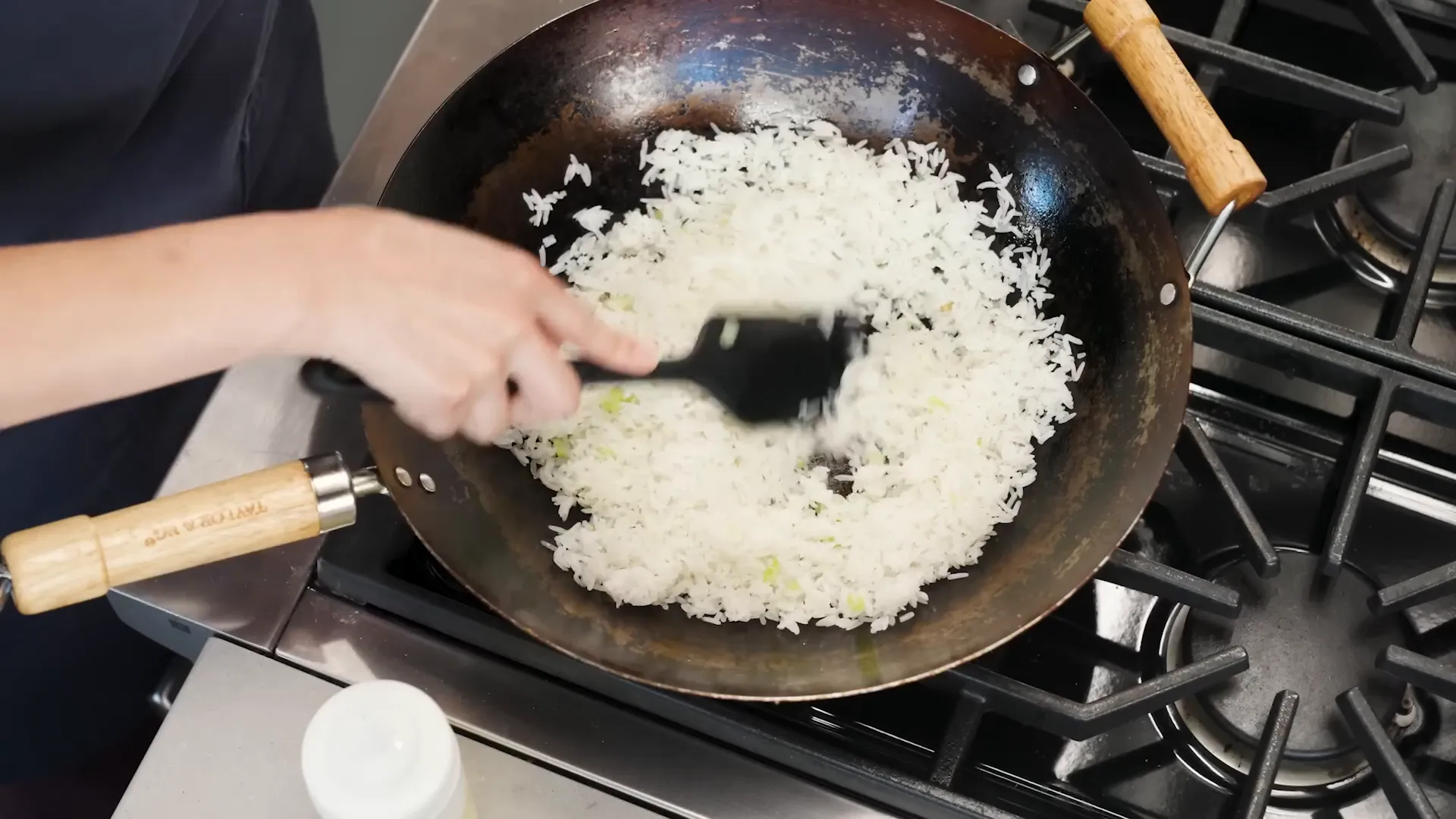
- Add about 4 cups chilled rice (roughly two parts rice : one part mix-ins). Break up clumps as you add and coat grains in scallion oil.
- Spread rice into a thin layer and season generously with salt and pepper. If stubborn clumps remain, add 1–2 tablespoons water and cook it off to lubricate grains.
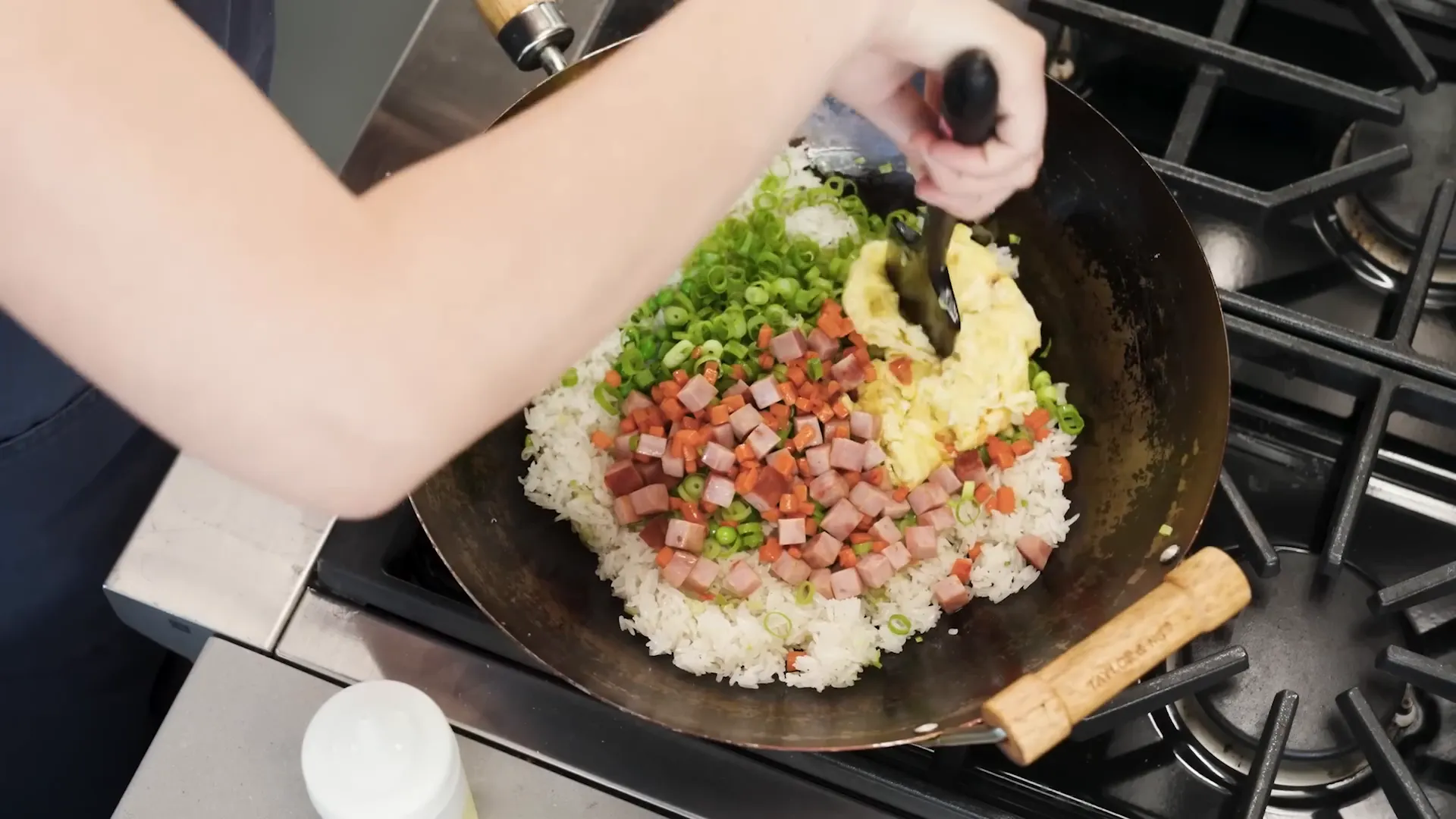
- Taste and adjust seasoning. Add frozen peas (no need to thaw), scallion greens, eggs, and the reserved mix-ins. Toss to combine and heat through.
Finishing touches and serving
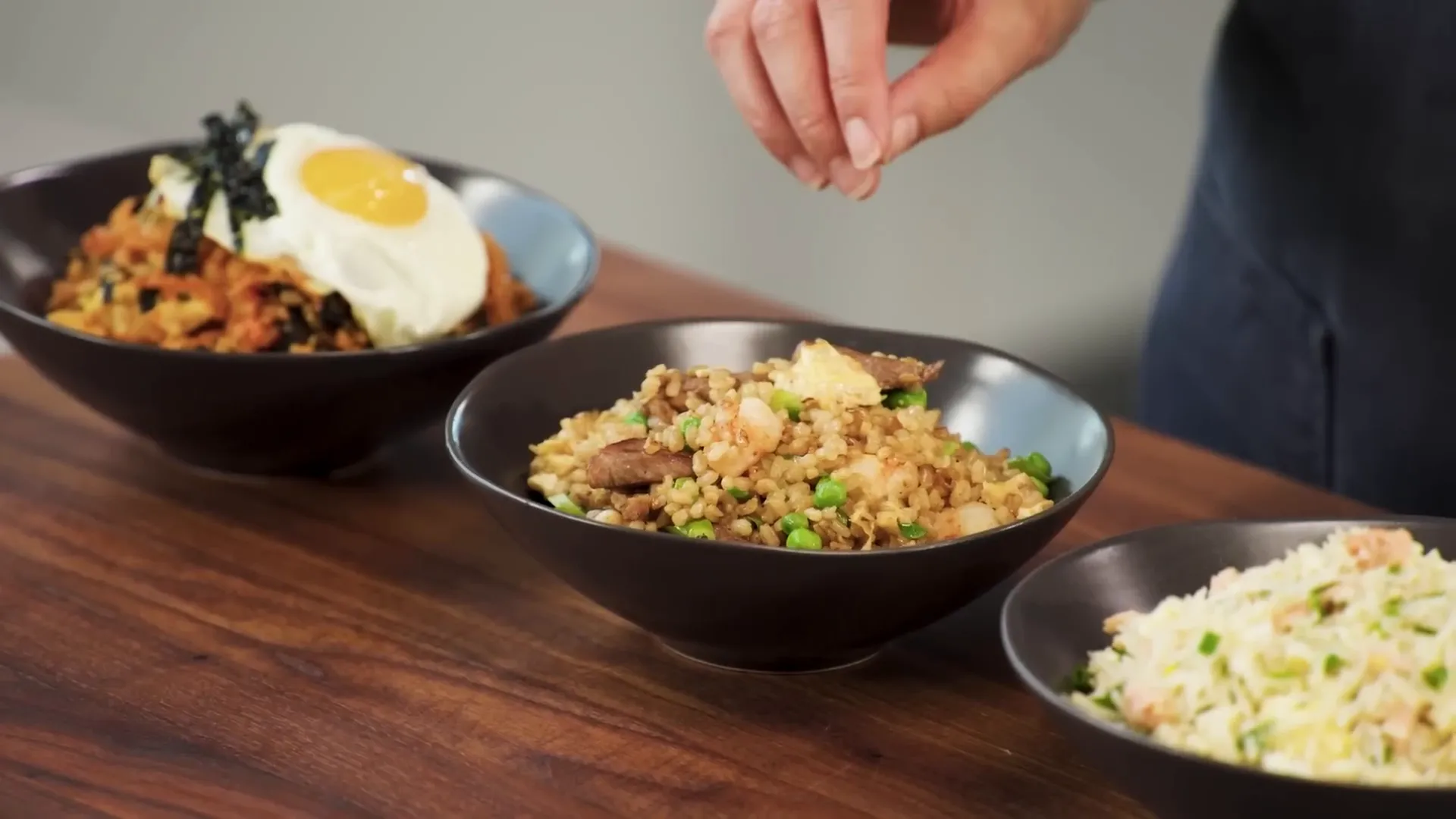
Lan keeps the seasoning straightforward—salt and pepper—but suggests finishing flavors like soy sauce, oyster sauce, or kimchi juice only after oil-based flavors are established to avoid making the rice gluey. Garnishes are playful: chili crisp, fresh herbs, toasted sesame seeds, or a squeeze of citrus add pops of contrast so every spoonful can offer something new.
The result is comforting: tender egg ribbons, sweet peas and carrots, salty pops of ham, and jasmine rice with a subtle popcorn-like aroma. For readers who want more variations, Lan’s approach lets you riff endlessly—korean kimchi bokkeumbap, kedgeree with smoked salmon, or a brown-rice shrimp version are all just swaps away.
Try it your way
Readers are encouraged to experiment with proteins, vegetables, and aromatics while keeping the core formula intact. Practice the steps a couple of times and the technique will reliably deliver great fried rice. cooking, recipes, bon apetit becomes second nature when the method is nailed down—stale rice, uniform mix-ins, and a hot pan. Give it a try and share favorite combinations inspired by this approach to flavorful, dependable fried rice. cooking, recipes, bon apetit
This article was created from the video The Formula to Great Fried Rice, with Any Ingredients | Techniquely with Lan Lam with the help of AI.
The Formula to Great Fried Rice: cooking, recipes, bon apetit. There are any The Formula to Great Fried Rice: cooking, recipes, bon apetit in here.

