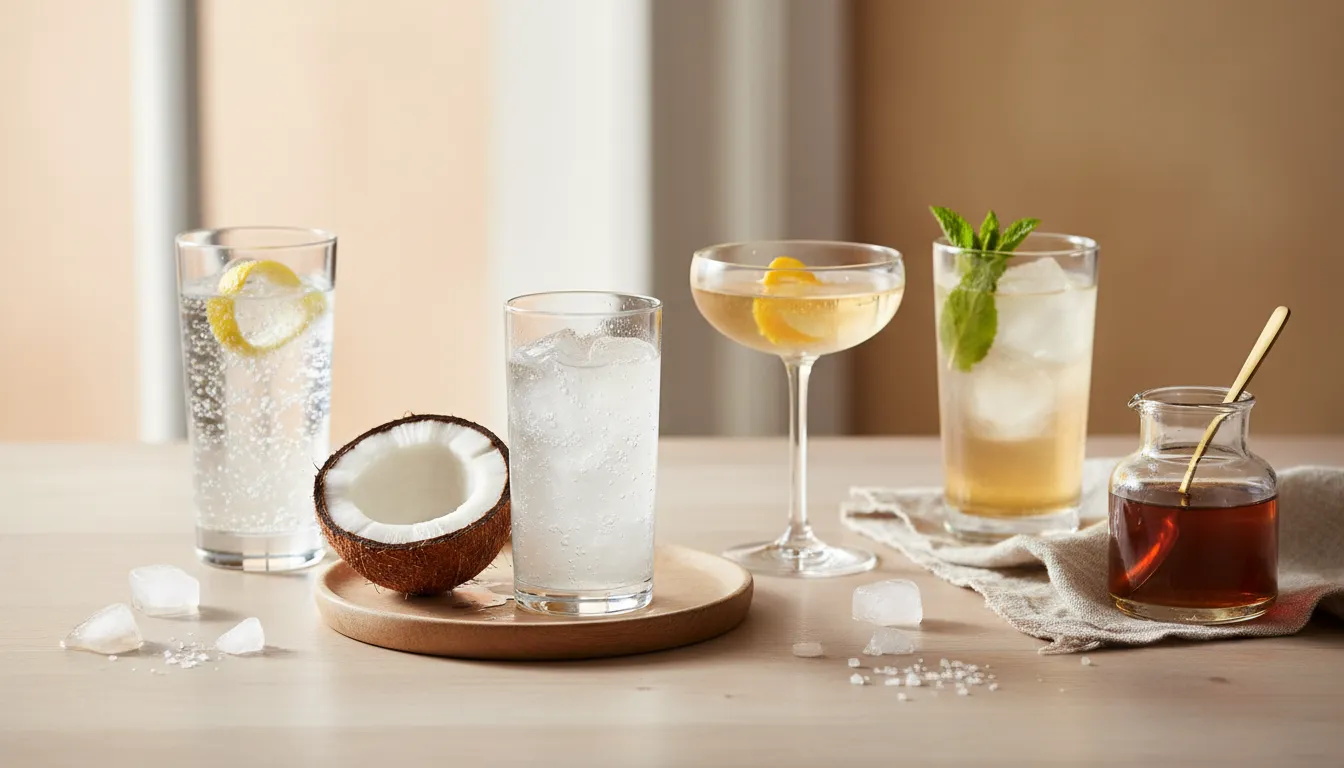
Bright, savory, and sophisticated: key takeaways
- Coconut water adds body and subtle savory notes that hold a mocktail together.
- Tonic water brings a clean bitter-sweet backbone, perfect with tart or earthy mixers.
- Tea concentrates create concentrated, spirit-like depth; add glycerin or tannin-rich juices for satisfying texture.
- These three pantry items let a home bartender build nonalcoholic cocktails that stand on their own instead of trying to mimic spirits.
Coconut water: the underappreciated backbone
Most people think coconut water is simply sweet and coconutty, but it does much more. When chilled and tasted with attention, coconut water reveals mild sweetness, a touch of minerality, faint salt, and an appealing viscosity. That combination gives a drink body without leaning fruity.
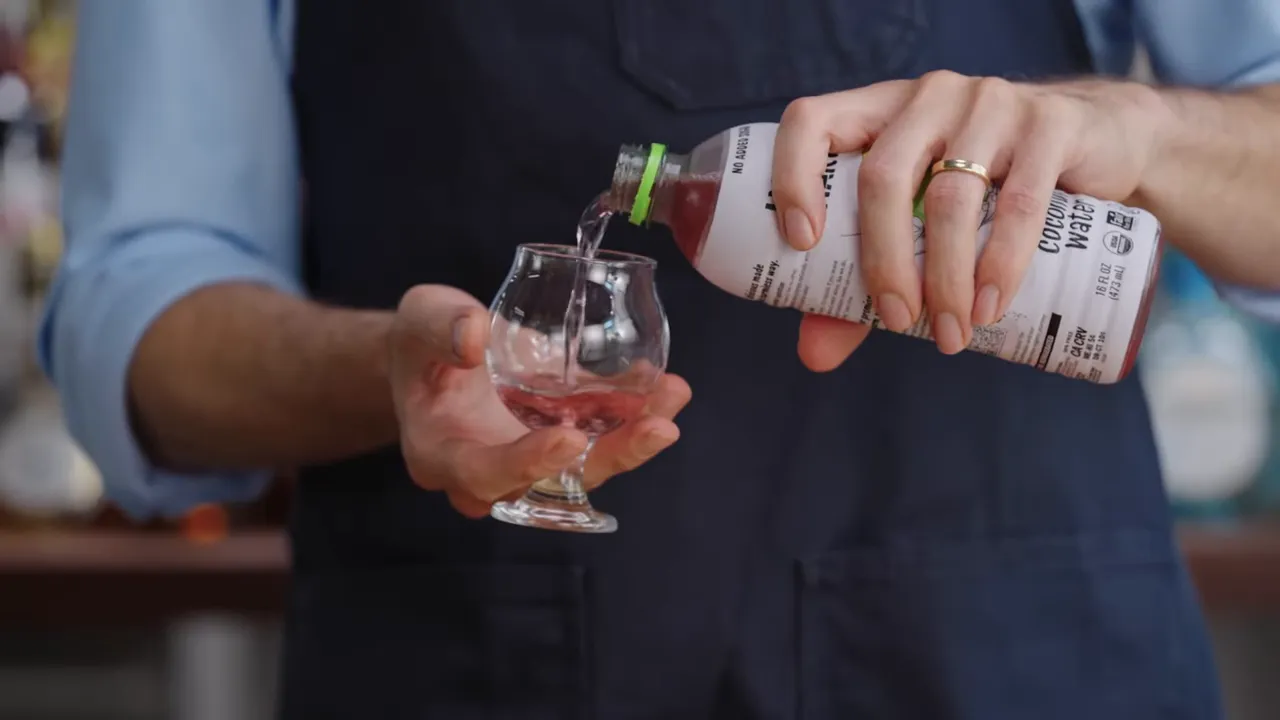
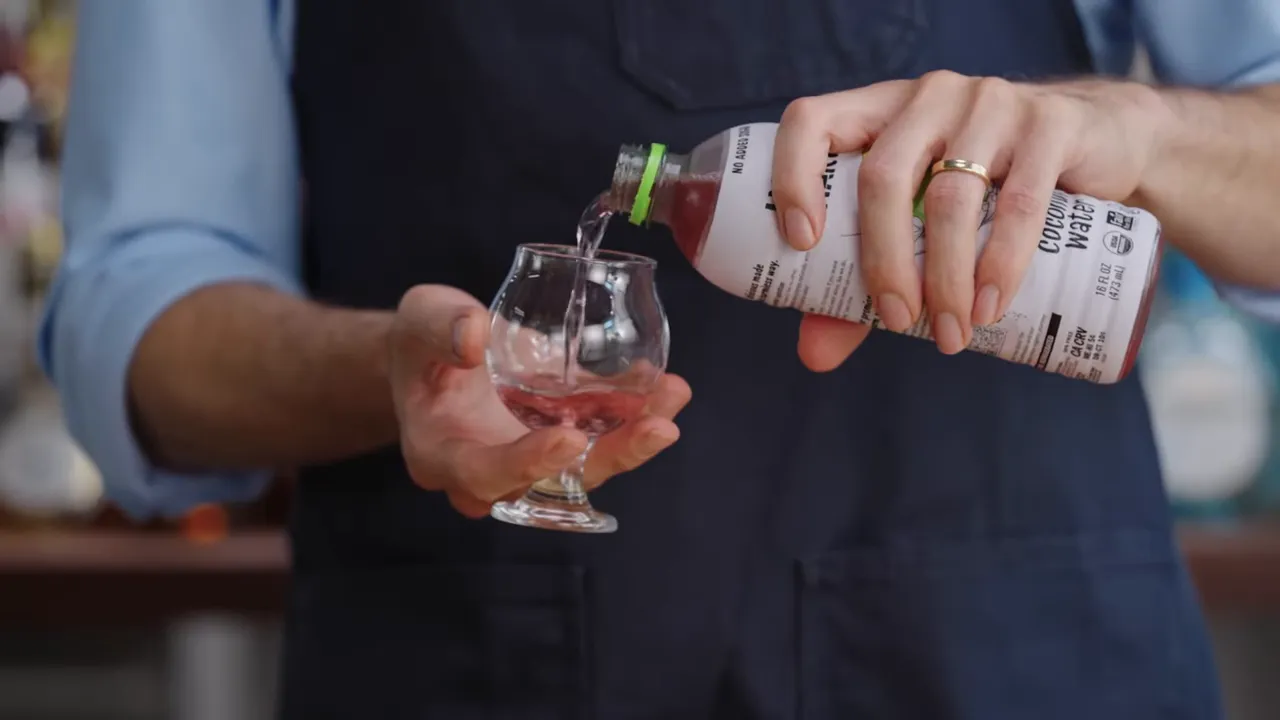
Use coconut water in place of a spirit when you want a clean, soft center—think of it as vodka without the burn. It allows recipes to cut down on syrup because it contributes both sweetness and mouthfeel.
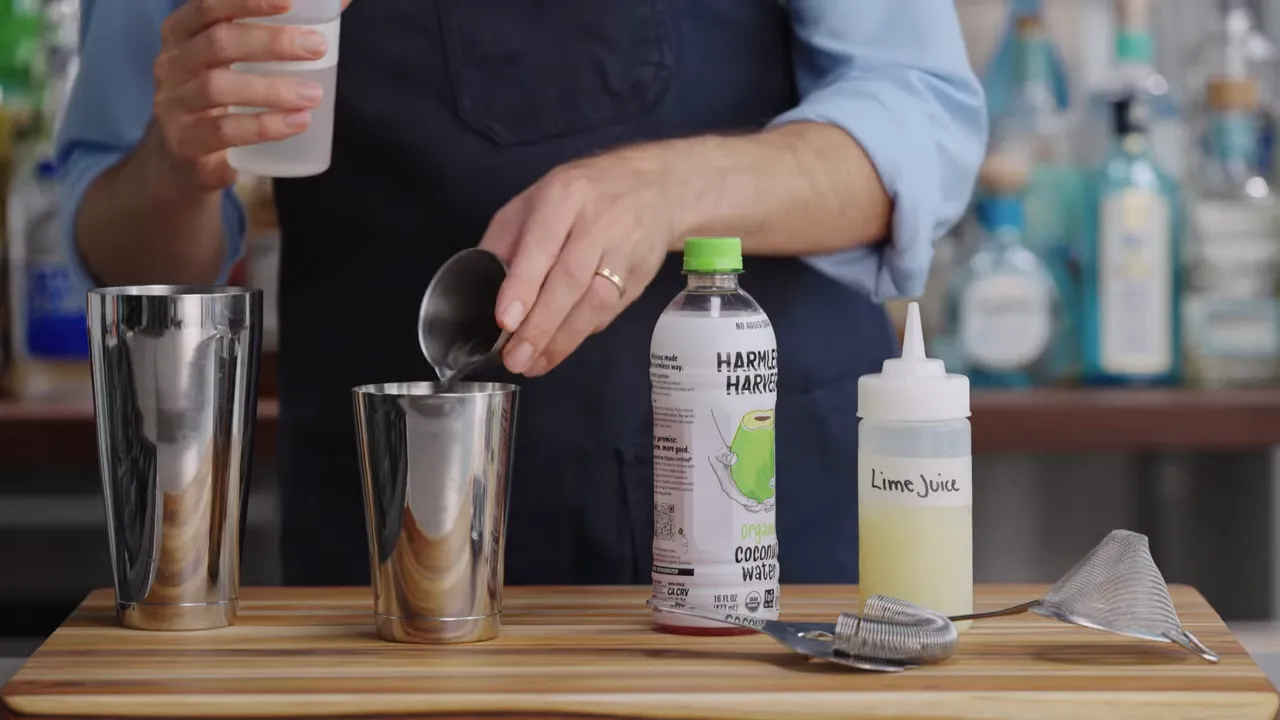
Virgin daiquiri (simple)
Ingredients
- 2 oz chilled coconut water
- 3/4 oz fresh lime juice
- 1/2 oz simple syrup
- Ice
Shake with ice, strain into a chilled coupe, and enjoy a surprisingly sophisticated mock daiquiri that is balanced and not cloying.
Variations: muddle mint and top with seltzer for a virgin mojito, or add orange syrup for a margarita-style twist. For adventurous palates, pair coconut water with Thai basil and chili for texture and heat.
Tonic water: bitter-sweet structure
Tonic water is more than a gin mixer. Its quinine-derived bitterness and subtle citrus notes make it an excellent structural ingredient for nonalcoholic cocktails. A small amount of tonic layers flavor and aroma without overwhelming delicate ingredients.
History aside, tonic's real power in mocktails is how it balances sweet, earthy, and tart components. A quality tonic should be clean, citrus-forward, and show balanced bitterness and sweetness. Popular picks in testing include Polar and Fever-Tree.
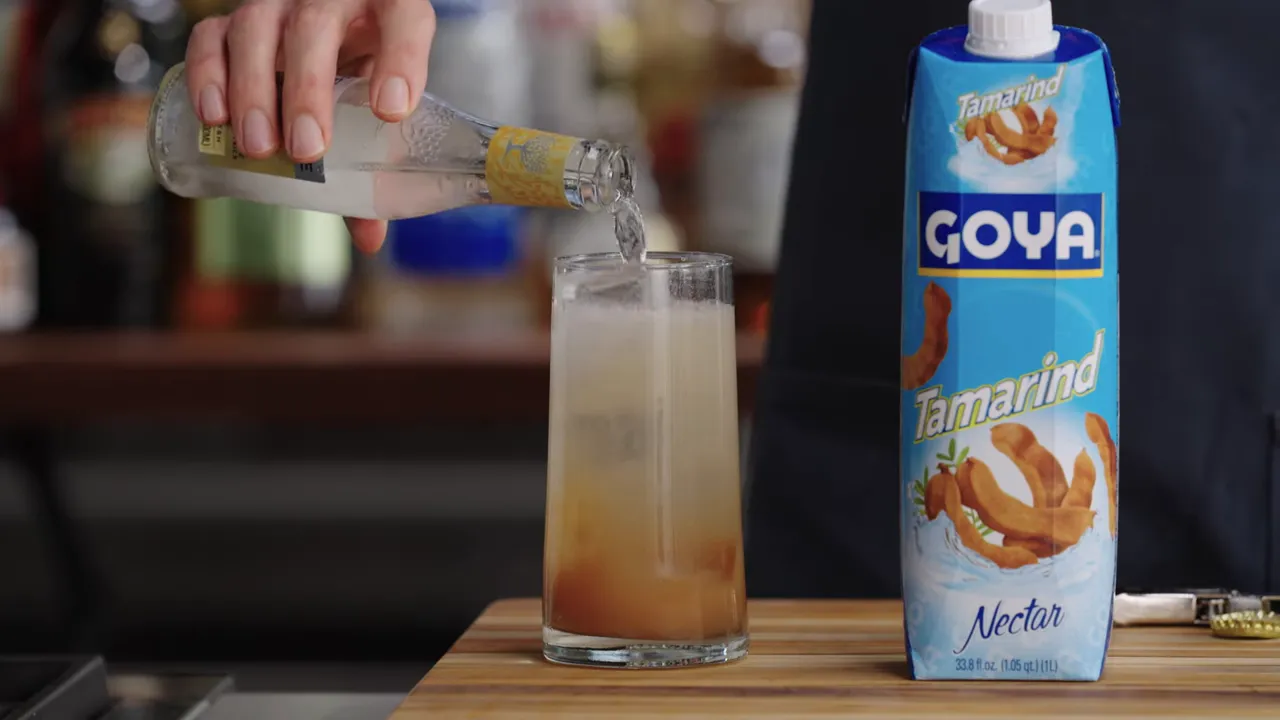
Tamarind and tonic (refreshing)
Ingredients
- 2 oz tamarind nectar
- 1/2 oz lime juice
- 1/4 oz simple syrup
- 6 oz tonic water
- Ice and lime wedge for garnish
Build over ice in a Collins glass, top with tonic, stir gently to preserve fizz, and garnish with lime. Tamarind's sour, caramel-like notes are perfect with tonic's bitter-sweet profile.
Other tonic pairings: espresso tonic for a fizzy coffee lift, or make a DIY tonic syrup to control bitterness and sweetness for more inventive blends.
Tea concentrates and glycerin: craft depth and texture
Steeped teas provide concentrated, complex flavor that can mimic the smoky, herbal, or tannic qualities of spirits. Use bold black teas, smoked teas, or floral infusions as the base "spirit" in a mocktail.
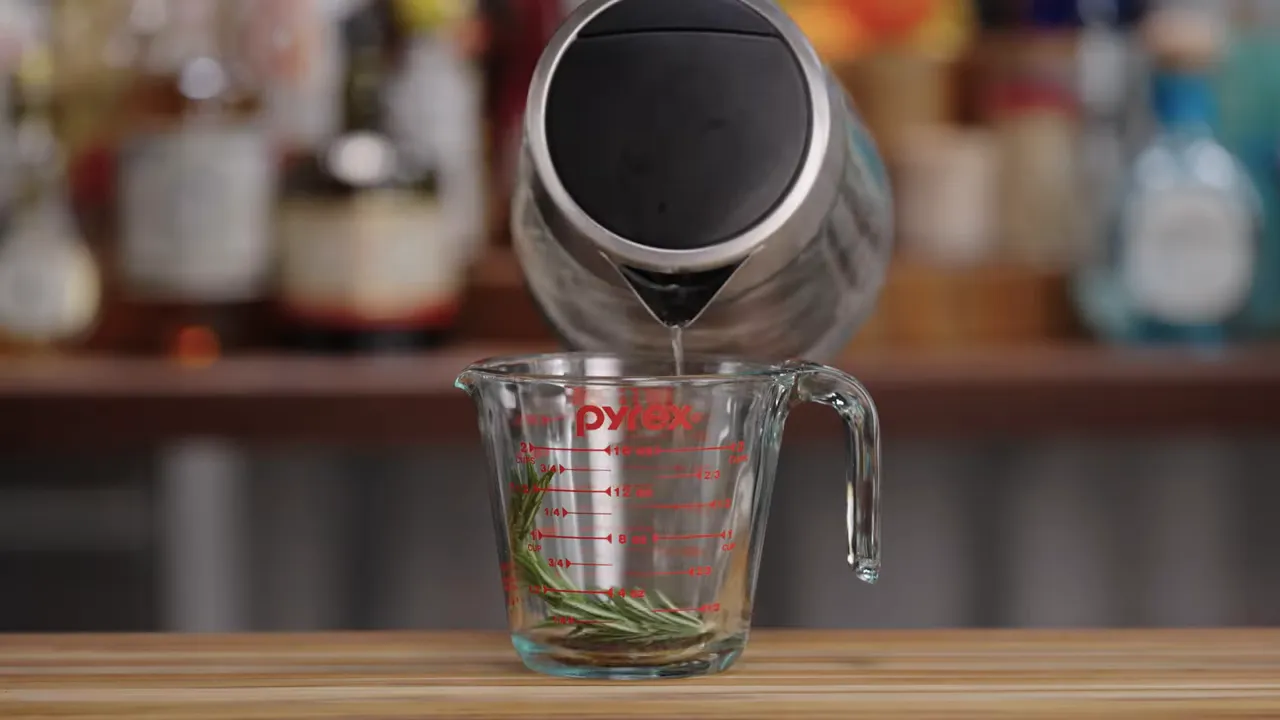
One pro tip is to add a small amount of food-grade vegetable glycerin for extra viscosity. Glycerin has nearly the same sweetness as simple syrup but is far more viscous, adding a luxurious mouthfeel so the drink does not feel thin.
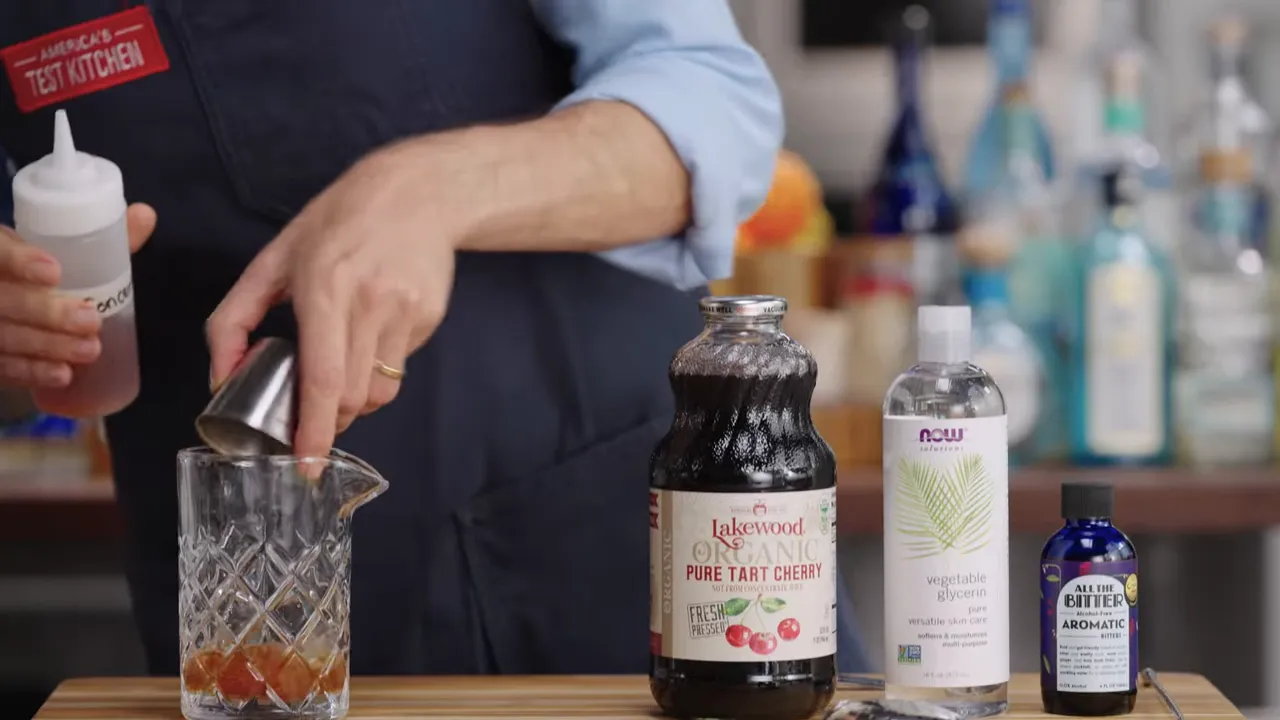
Traverse City: a nonalcoholic Manhattan
Ingredients
- 2 oz concentrated smoked tea (for example, Lapsang Souchong steeped with rosemary)
- 1 oz tart cherry juice
- 1/4 oz vegetable glycerin (or simple syrup)
- 1/8 tsp nonalcoholic aromatic bitters
- Ice, cherry, and optional torched rosemary for garnish
Stir with ice, strain into a chilled glass, and garnish. The smoked tea provides piney, smoky notes; tart cherry adds vermouth-like dark fruit; glycerin and tannins deliver satisfying texture.
What to stock for a versatile nonalcoholic bar
- Coconut water (chilled bottles)
- Tonic water (a citrus-forward brand and a bolder brand for variety)
- Loose-leaf teas for concentrates: smoked black, Earl Grey, hibiscus
- Vegetable glycerin (optional) or simple syrup
- Tamarind nectar, tart cherry juice, citrus, and aromatics for building complexity
Final sips
Nonalcoholic cocktails can be joyful, layered, and complex. By leaning on coconut water for body, tonic water for bitter-sweet structure, and tea concentrates for concentrated flavor, the home bartender can create memorable drinks that do not rely on imitation. These staples make it simple to experiment, reduce syrup overload, and craft unique flavors that invite another sip.
Embrace curious combinations, keep a few of these grocery items on hand, and let creativity guide the next round of cooking, recipes, bon apetit.
This article was created from the video 3 Grocery Items for Great Nonalcoholic Cocktails | The Cocktail Lab | America's Test Kitchen with the help of AI.
3 Grocery Staples That Transform Nonalcoholic Cocktails | cooking, recipes, bon apetit. There are any 3 Grocery Staples That Transform Nonalcoholic Cocktails | cooking, recipes, bon apetit in here.

