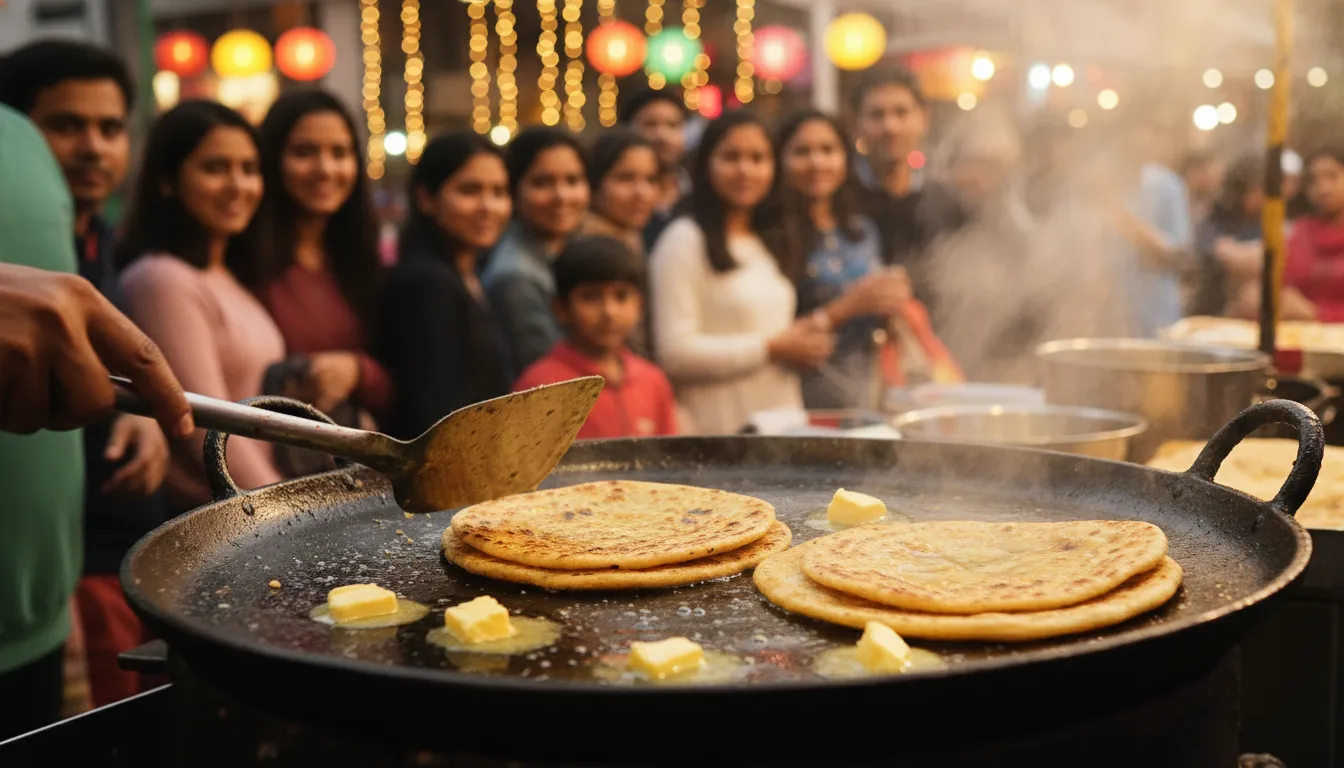
The words cooking, recipes, bon apetit capture more than a set of search terms — they point to the simple delight of food made well and shared freely. On a bustling Delhi evening a paratha stand proves this: stuffed flatbreads cooked with patience, a cloud of ghee-scented steam, and a line of happy customers. This guide celebrates that joyful craft, explains what makes these parathas sing, and shares practical tips for recreating the spirit at home.
What a Paratha Is and Why It’s Comfort Food
A paratha is a stuffed flatbread — dough encases a filling and gets rolled thin, then fried on a hot tawa until golden and flaky. What transforms it from simple bread to comfort food is the butteriness: generous ghee or butter gives caramelized milk solids, nutty aroma, and crisp edges while keeping the interior tender and moist.
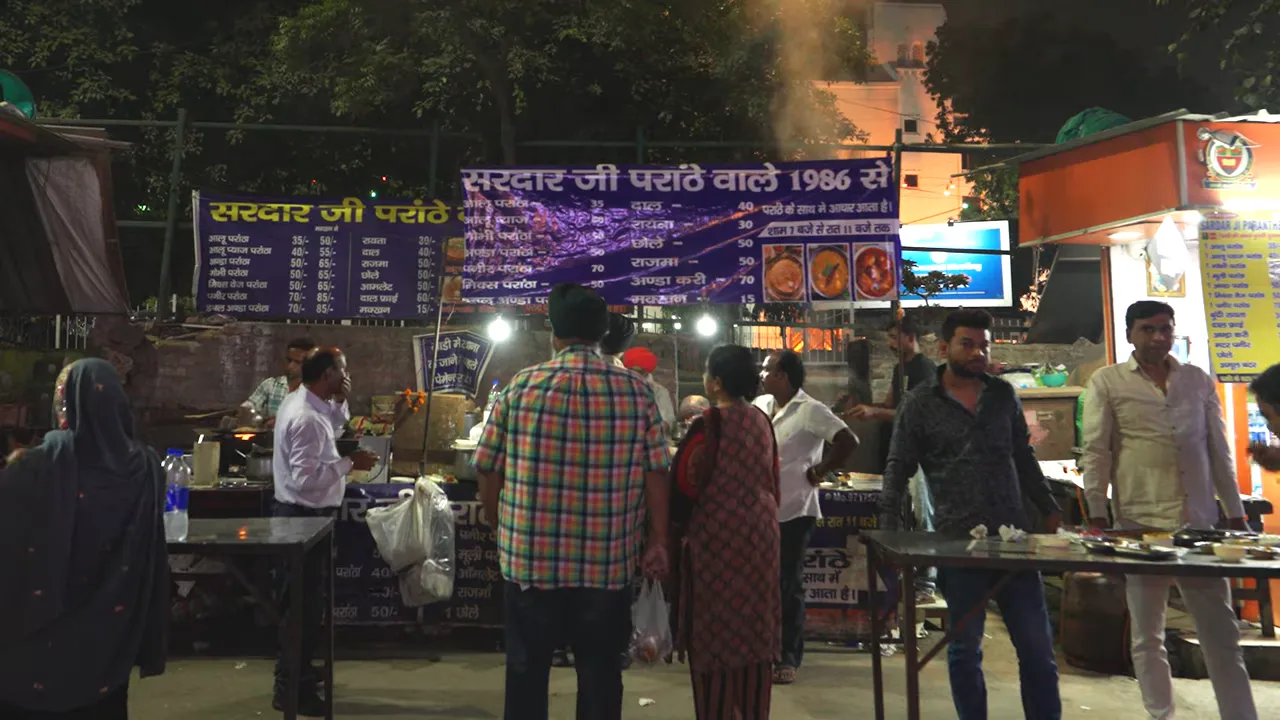
How the Pros Make Perfect Stuffed Parathas
Street cooks have honed a compact, energetic workflow so each paratha comes out fast, flaky, and reliably filled. Key steps:
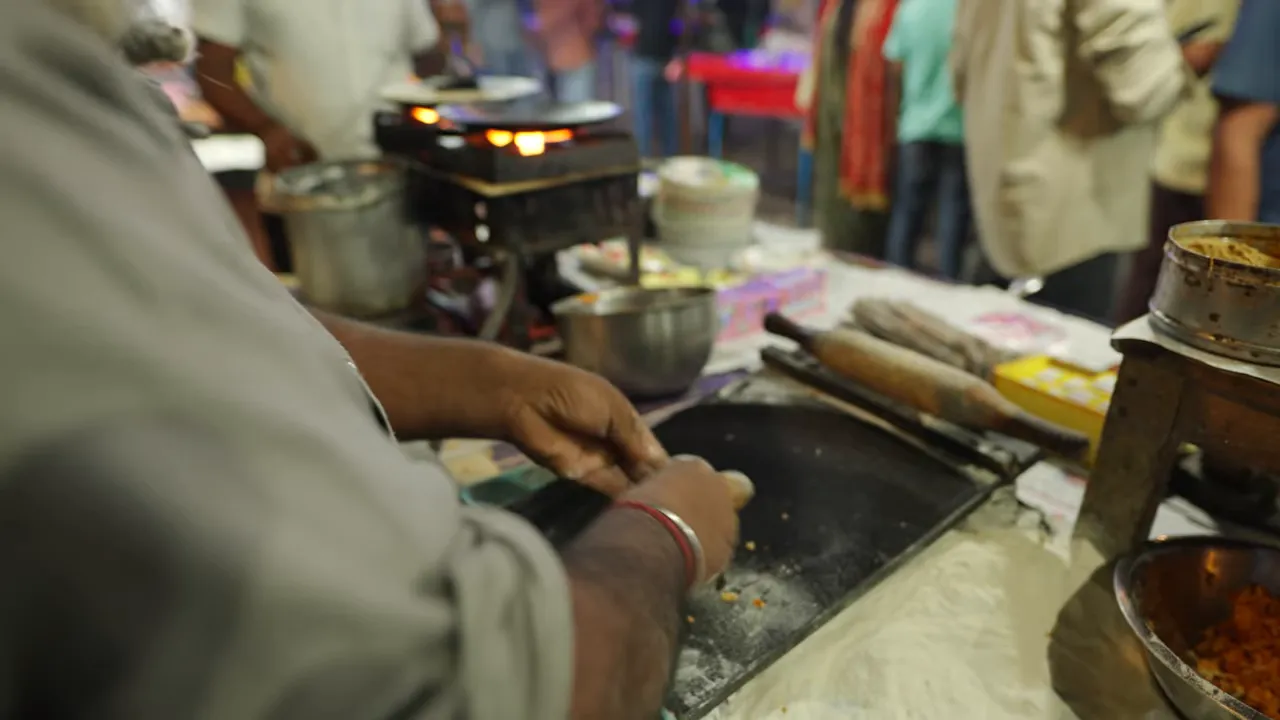
- Balling and resting — Dough is portioned about the size of a golf to tennis ball and smoothed by hand.
- Hollowing and stuffing — Each ball is hollowed, filled with seasoned potato, onion, or other fillings, and sealed so the stuffing sits entirely inside the dough.
- Rolling — The sealed ball is gently flattened and rolled into a thin disc without tearing, distributing filling to the edges.
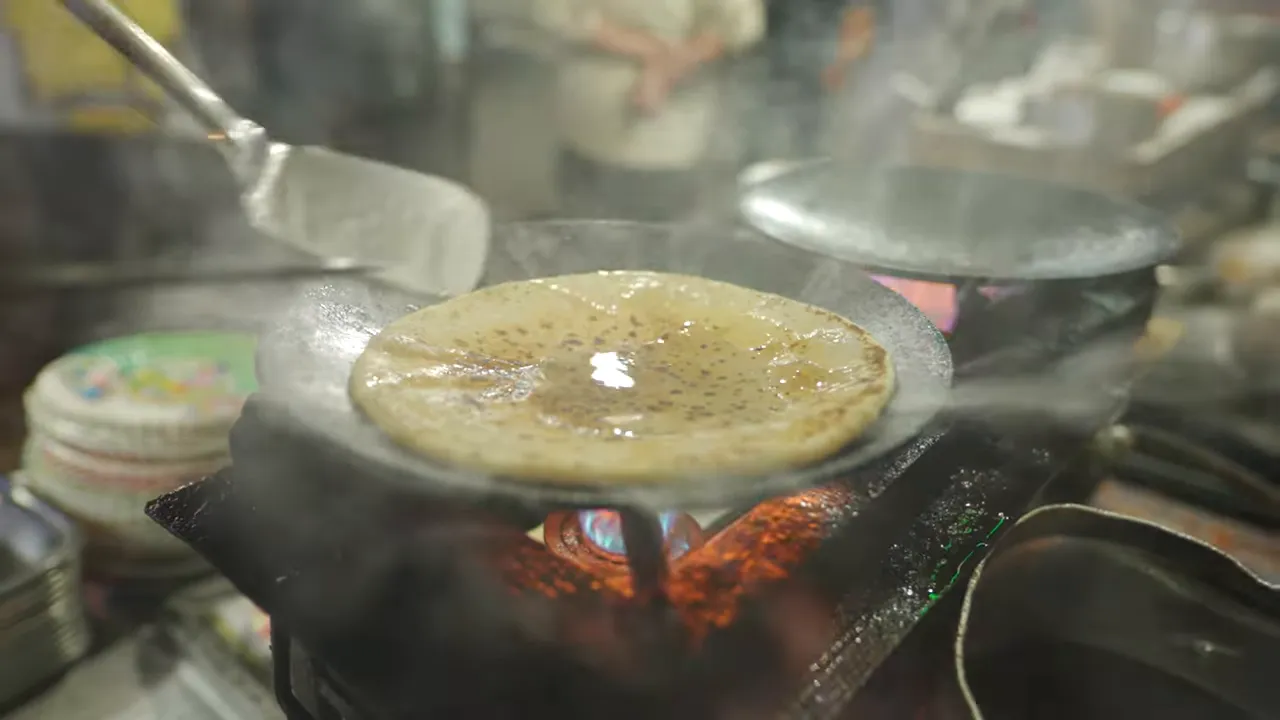
- Hot cooking — A blistering cast-iron tawa and liberal ghee create quick browning and steam pockets that make the paratha puff.
Why the puff matters
The brief, intense heat traps steam inside, creating air pockets that finish-cook the filling and keep the paratha light. Experienced cooks press edges at just the right moments to force air towards the center so the bread puffs and the inside stays juicy.
Typical Fillings and Small Tools of the Trade
At a classic stall the lineup usually includes:
- Aloo (potato) — spiced mashed potato mixed with jagged onion pieces for texture.
- Keema or paneer — minced meats or cheeses in some stalls.
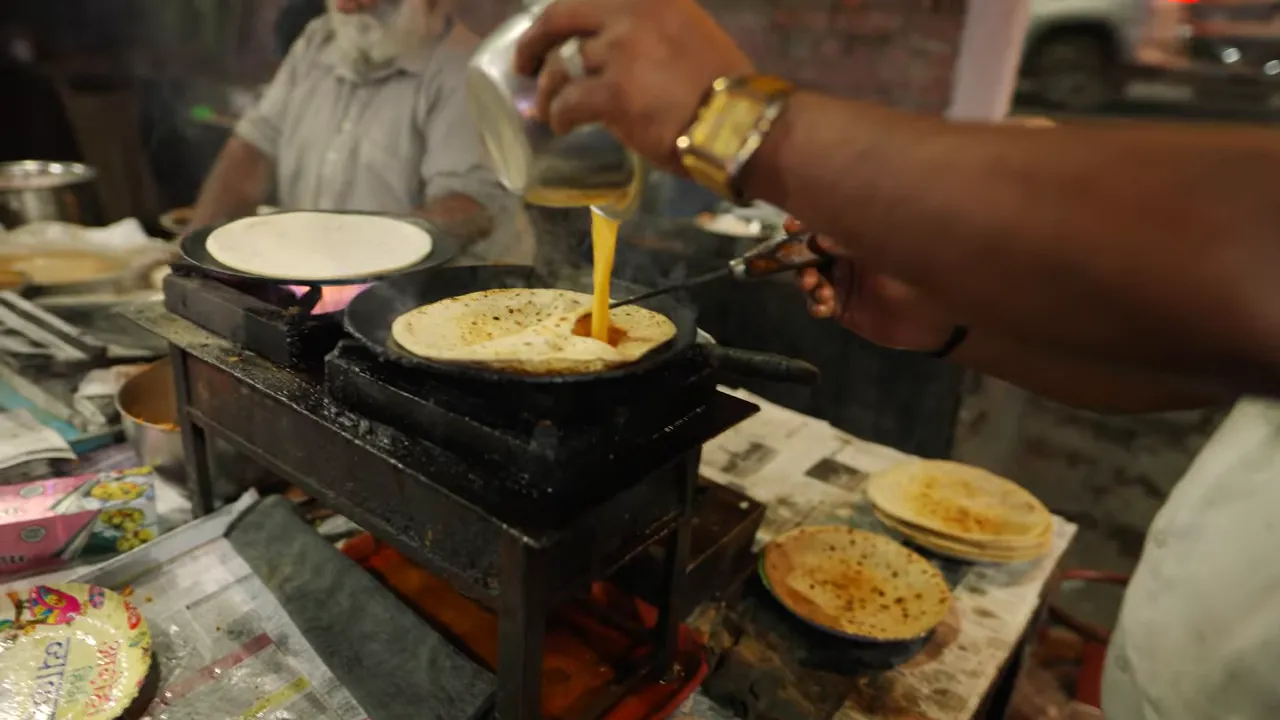
- Egg paratha — a brilliant technique where egg is poured into a pocket so it cooks inside the dough.
Condiments: The Little Flavors That Make a Big Difference
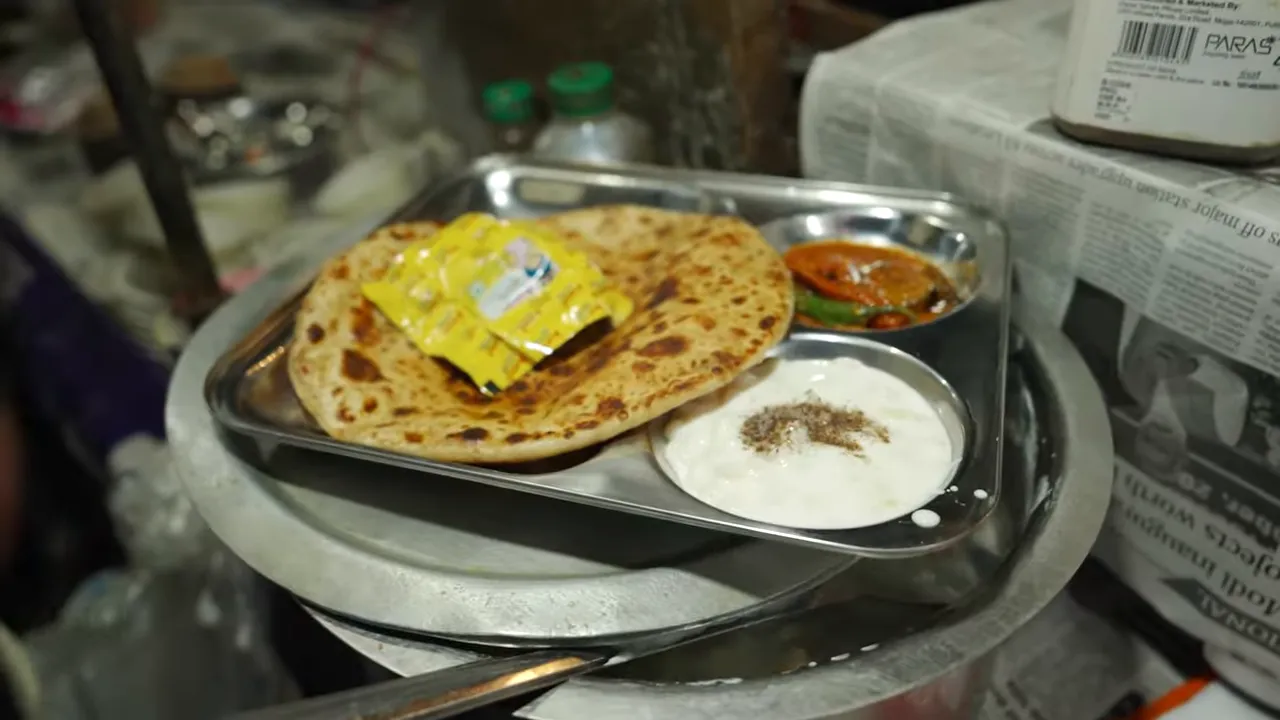
Parathas love contrast. Typical accompaniments offer bright or tangy counterpoints to ghee richness:
- Raita — a cooling yogurt sauce often dusted with special masala.
- Pickle — spicy, sour, and punchy to cut through the butter.
- Green chutney — fresh, herby, and slightly acidic if desired.
How to Recreate the Street-Paratha Spirit at Home
Reproducing the exact speed and heat of a Delhi street grill is a challenge, but the essential idea is simple: balance high heat, enough fat, and an enclosed filling.
Quick home method
- Dough: 2 cups all-purpose flour, pinch of salt, 2 tablespoons oil, water to knead. Rest 20 minutes.
- Filling: Boil and roughly mash 2 medium potatoes. Mix with chopped onion, green chili, cumin, coriander, salt, and garam masala.
- Assemble: Make small balls of dough, hollow, spoon in filling, seal, then roll gently into discs.
- Cook: Heat a heavy skillet to high, smear with ghee, cook each side 1 to 2 minutes until golden and puffed. Finish with a little browned butter for that streetside nuttiness.
Pro tips
- Use a heavy pan to mimic the tawa’s quick sear.
- Don’t over-roll — thin but not paper-thin, so filling stays intact.
- Ghee over butter for higher heat and clean browning, then brush with butter at the end for flavor.
Taste and Texture: What to Expect
A well-made paratha is simultaneously crisp, buttery, and chewy with pockets of steam and perfectly cooked filling. The caramelization from ghee delivers a toasty sweetness while pickles and raita add brightness. It is approachable, inexpensive, and endlessly satisfying — the kind of food that feels like a hug.
Why Street Cooking Feels So Good
Street cooking concentrates the essentials: compact setup, economy of motion, and flavors that travel well. There is warmth in standing shoulder to shoulder with strangers, passing plates and making small talk. The experience is as much about company and place as it is about the food. That cozy, communal energy is something to bring into the kitchen, whether cooking for one or many.
Final bites
These parathas are a lesson in joyful practicality. They teach patience in small steps, honor humble ingredients, and celebrate fat as a flavor vehicle. For anyone who loves cooking, recipes, bon apetit, studying a simple street stall is a delicious education. Try the home method, keep your pan hot, and don’t be shy with the ghee — happiness is right around the next golden edge.
Happy cooking and happy eating!
This article was created from the video The Man Running a 50-Year-Old Paratha Stand on the Delhi Streets | Street Eats | Bon Appétit with the help of AI.
Cooking, Recipes, Bon Apetit: The Joy of Delhi’s Buttery Parathas. There are any Cooking, Recipes, Bon Apetit: The Joy of Delhi’s Buttery Parathas in here.

