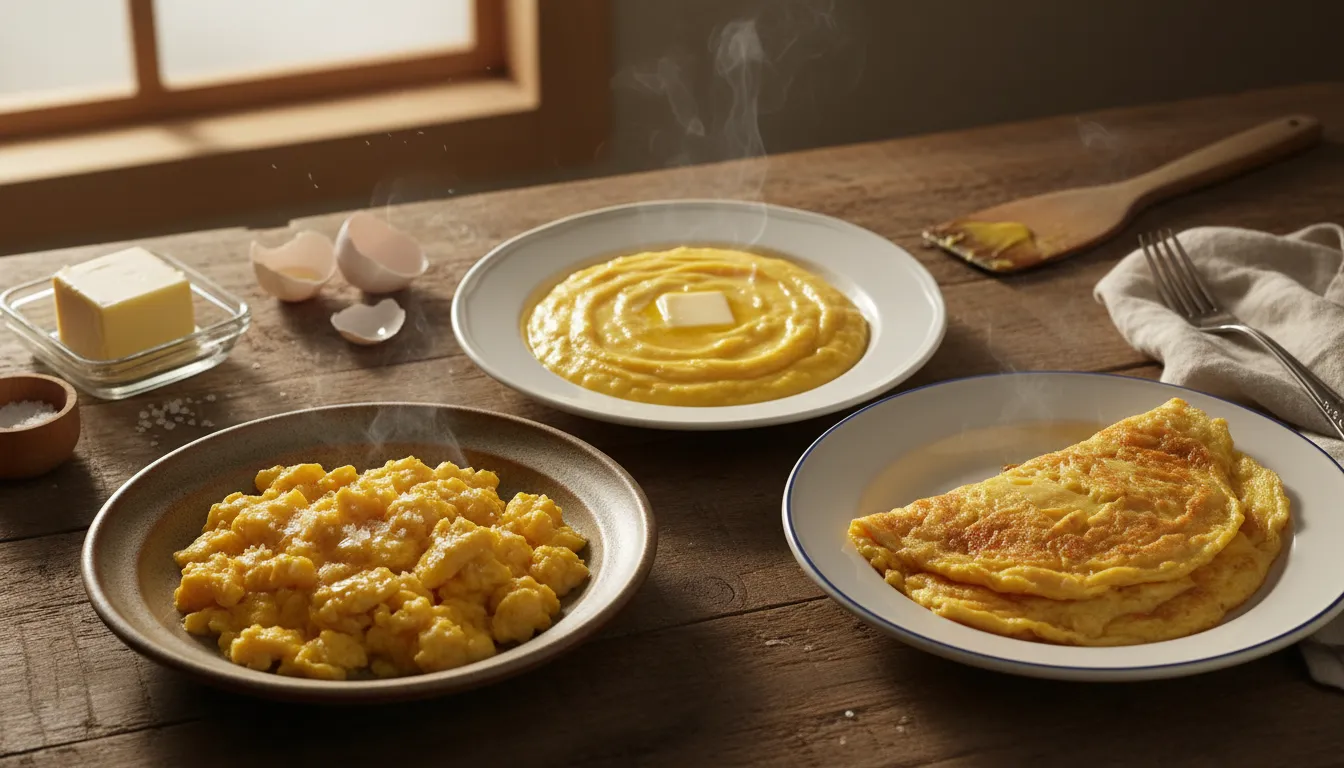
Bright, buttery, and endlessly comforting, scrambled eggs are a breakfast superstar. These three variations highlight how tiny changes in temperature and technique transform the same simple ingredients into very different experiences. This guide presents approachable steps, helpful tips, and a few photos to make each method easy to follow. These are true cooking, easy recipes for anyone who wants dependable results with minimal fuss.
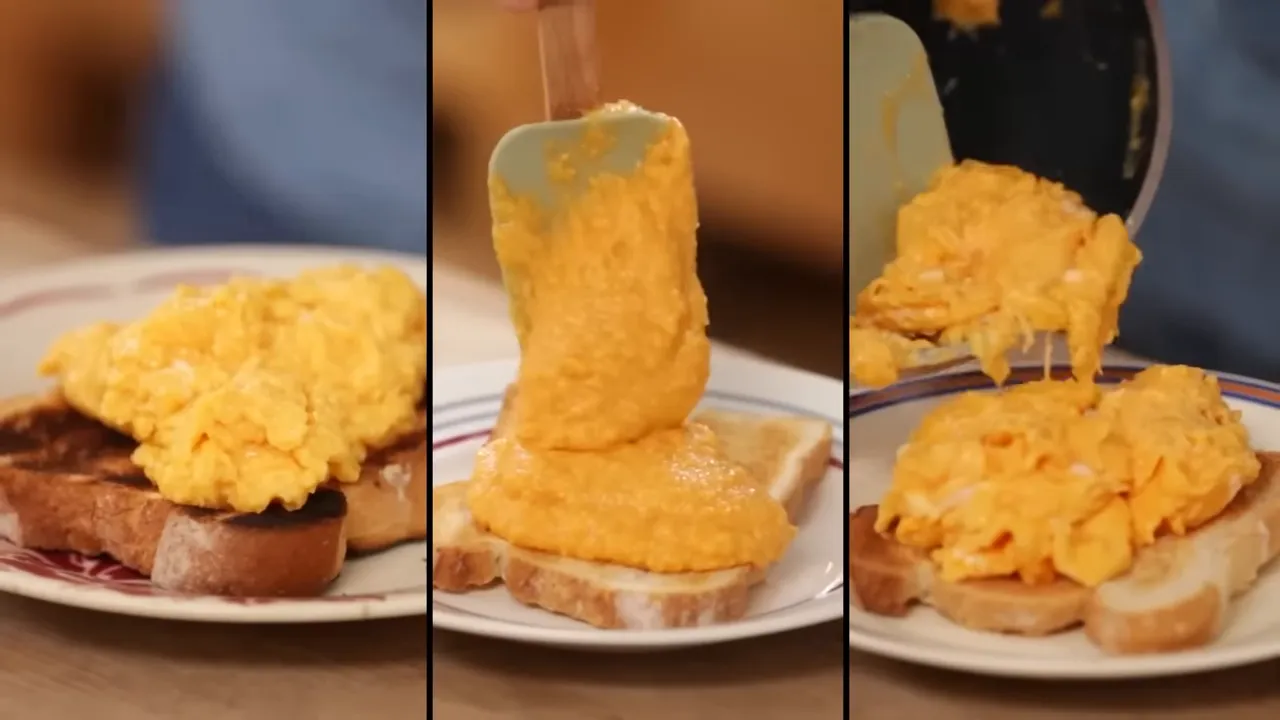
Why these three styles?
All three versions use the same building blocks — eggs, butter, and a pinch of salt — yet the result changes because of heat and movement. The goal is to show how technique matters: medium curds for a cozy English scramble, slow and silky French eggs, and sheet-like diner folds for the American version. Practicing these gives tasty variety to morning routines and proves how fun cooking, easy recipes can be.
What you need
- Eggs – standard: two eggs per person is a great rule.
- Butter – a generous knob for flavor and texture.
- Salt – lightly season before or during cooking.
- Tools – a nonstick frying pan, a small spatula, and a whisk. For French-style, a heatproof bowl to use over a water bath.
How to make each scramble
English-style: soft, medium curds
Method:
- Whisk two eggs per person lightly with a pinch of salt.
- Heat the pan to medium, add a knob of butter and let it melt but not brown.
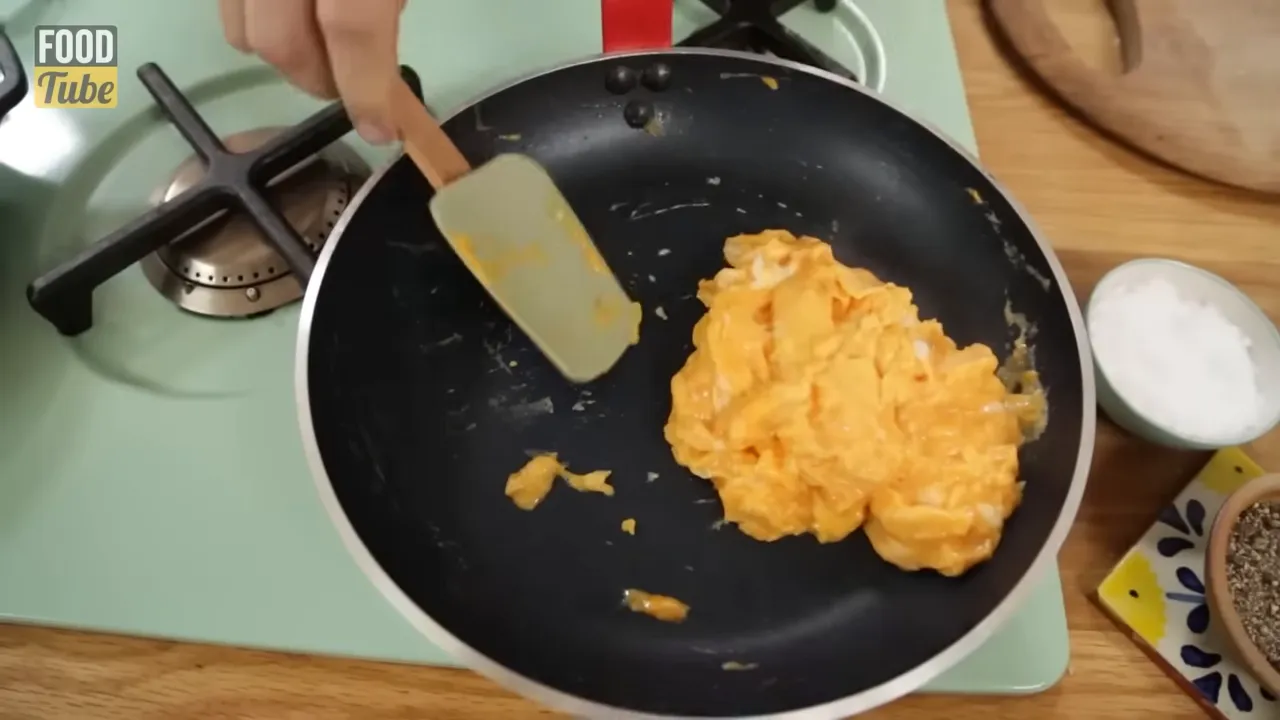
- Pour eggs in, let them set around the edges, then gently move them every 4 to 5 seconds with a spatula to form medium curds.
- When mostly set but still moist, slide eggs to one corner of the pan to rest. Residual heat finishes them without overcooking.
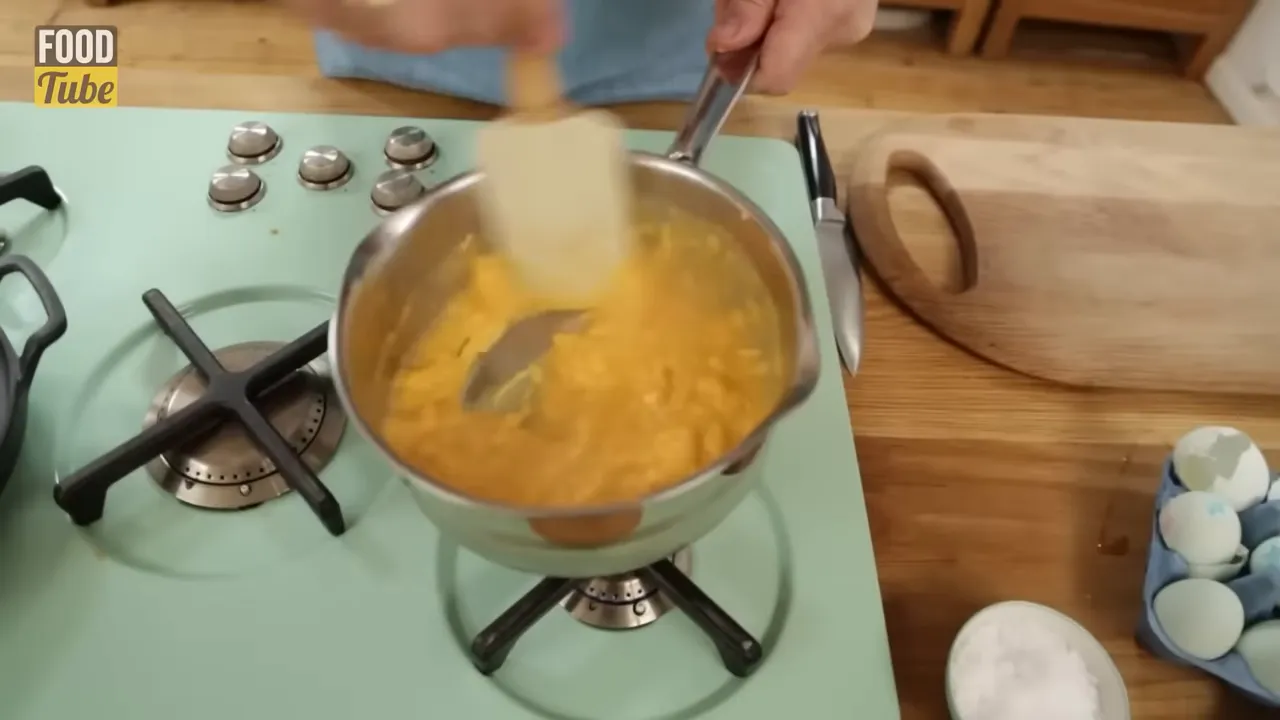
French-style: silky, slow-cooked eggs
Method:
- Lightly season the eggs and whisk.
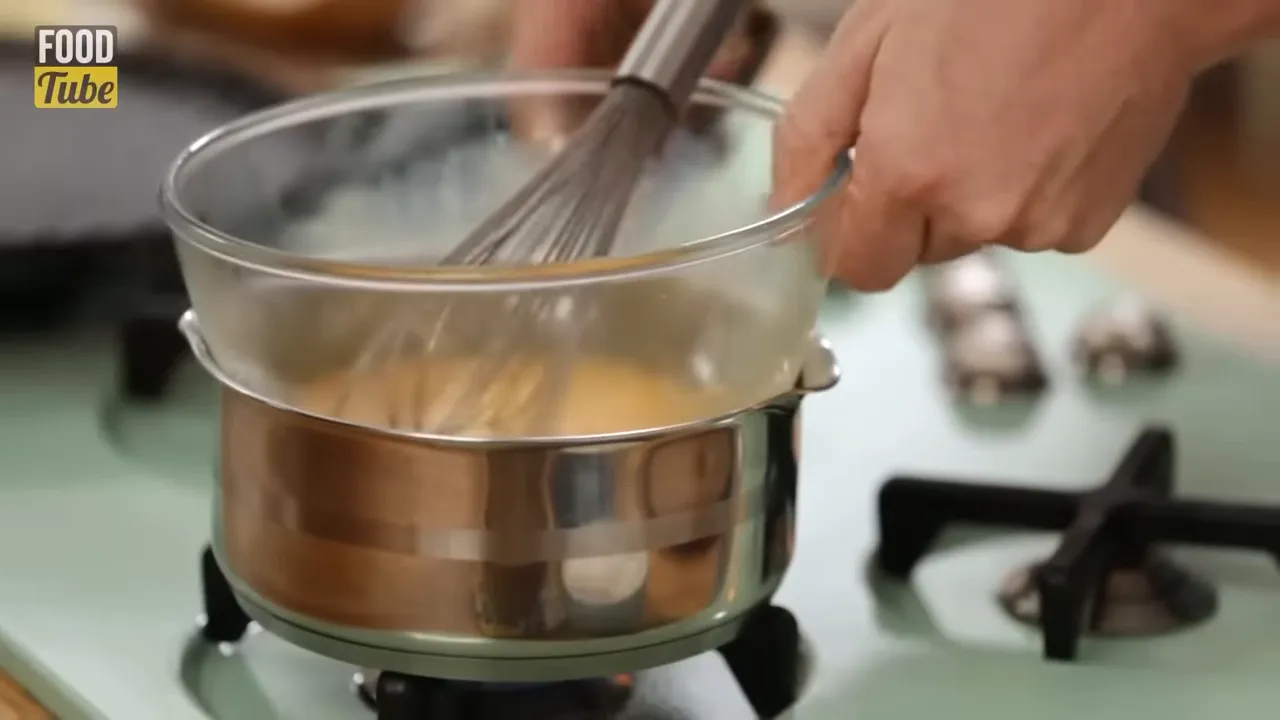
- Set a bowl over an inch of boiling water (a bain-marie). Keep the heat low; eggs cook best gently.
- Whisk until tiny curds form, then add a few knobs of butter and switch to a spatula to fold through slowly.
- Cook until extremely soft and luxurious. The texture is very fine and creamy.
American-style: folded diner eggs
Method:
- Whisk eggs with a pinch of salt. Heat a frying pan and melt butter until bubbling.
- Pour in eggs and, as they set, pull large sheets toward the center with a spatula to form broad folds.
- Keep heat gentle so shiny, tender parts remain alongside cooked sheets for a satisfying mix of textures.
Expert tips to master every scramble
- Use good eggs. Free-range or barn eggs make a noticeable difference in flavor and color.
- Low and slow. Most success comes from gentle heat. Avoid high flames that toughen protein.
- No need for milk. When cooked correctly, eggs are moist and creamy without cream or milk.
- Mind carryover cooking. Remove eggs just before they look fully done; residual heat will finish them.
- Two eggs per person is a satisfying portion and keeps timing predictable.
These three approaches are small, joyful examples of cooking, easy recipes that reward a little attention. Experiment with each one, and soon a weekday breakfast will feel like a mini celebration.
A few happy final tips
- Serve on buttered toast or straight from the pan. A sprinkle of herbs or black pepper is all that’s needed.
- Make them your own. Try a little grated cheese, a spoonful of crème fraîche for the French style, or chopped chives for the American folds.
This article was created from the video Perfect Scrambled Eggs | Jamie Oliver with the help of AI.
Perfect Scrambled Eggs — cooking, easy recipes. There are any Perfect Scrambled Eggs — cooking, easy recipes in here.

